2 March slots left • April diary now open
Large Tiles vs Small Tiles: What Works Better?
Large tiles and small tiles create very different bathroom experiences. One is not automatically better than the other. The right choice depends on the room size, the visual mood you want, the amount of detail the bathroom can handle and how the tile strategy works with the rest of the layout. The strongest choice is usually the one that makes the room feel calmer, more balanced and easier to read.
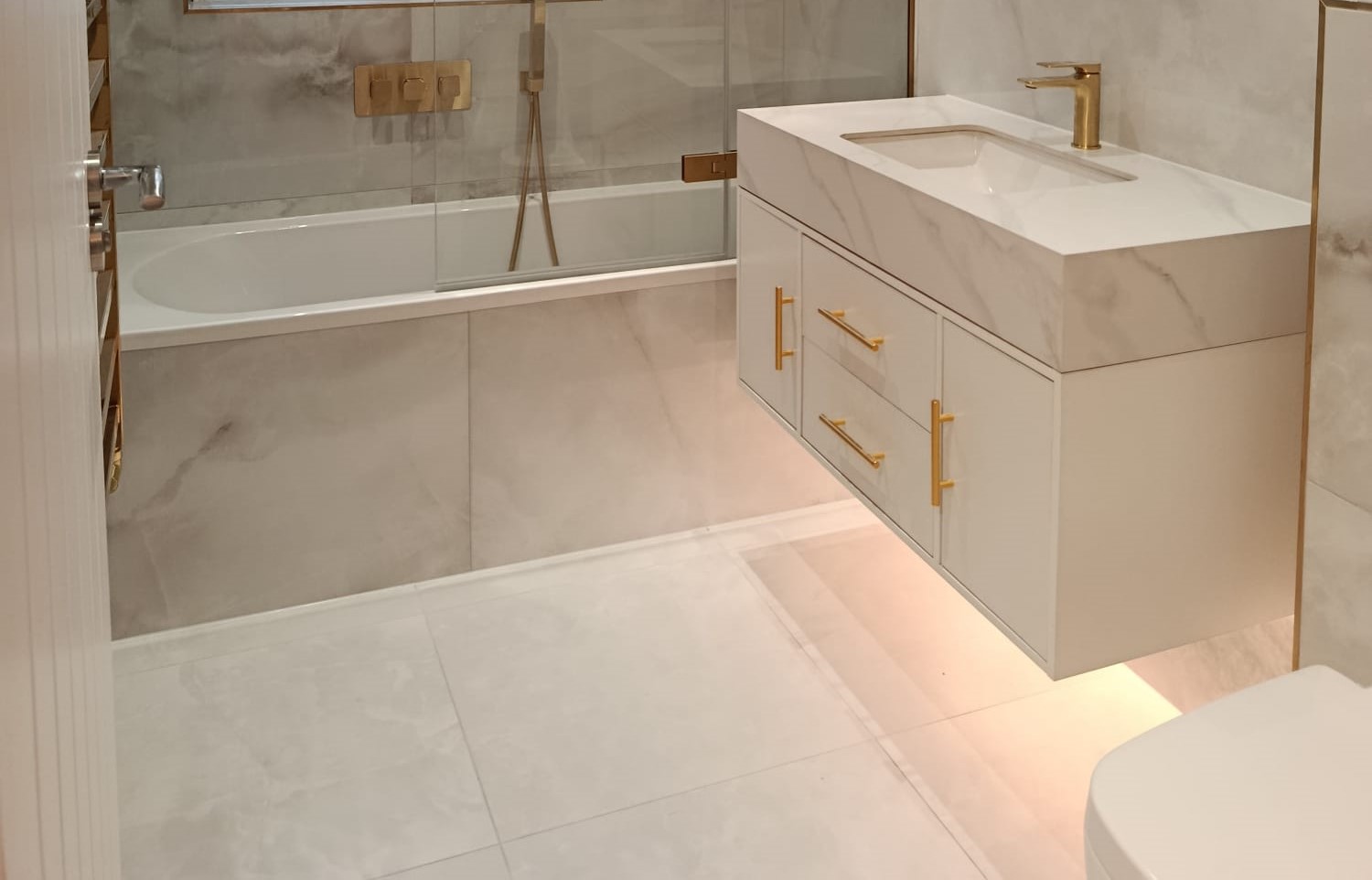
Tile size is one of the most misunderstood finish decisions in a bathroom. Many people assume that large tiles always make a room feel bigger, while small tiles are only for decorative or traditional spaces. In reality, both can work beautifully. What matters most is how the tile scale interacts with the room proportions, grout lines, colour palette and overall finish direction.
A tile can look impressive in a showroom and still feel wrong in a real bathroom if the room cannot support it properly. That is why this decision works best when it is tied to the bathroom as a whole rather than treated as an isolated style preference.
Key takeaways before choosing tile size
- Large tiles usually create a calmer visual flow because there are fewer grout lines.
- Small tiles can add texture and character, but they often create more visual activity.
- The best tile size depends on the room, not on a universal rule.
- Grout tone and tile colour affect the result almost as much as tile size itself.
- In many bathrooms, the strongest finish schemes come from combining restraint with proportion rather than following trend alone.
1. Why tile size changes the feel of a bathroom so much
Tile size affects how the eye moves through the room. Larger tiles tend to create longer visual lines and fewer interruptions. Smaller tiles break the surfaces up more often, which can either add detail and charm or make the space feel busier than necessary.
This is especially important in bathrooms because the room usually contains many hard surfaces already. Wall tiles, floor tiles, glass, mirrors, fittings and grout all contribute to the visual rhythm. Tile size either calms that rhythm or increases it.
2. Large tiles often create a cleaner and calmer look
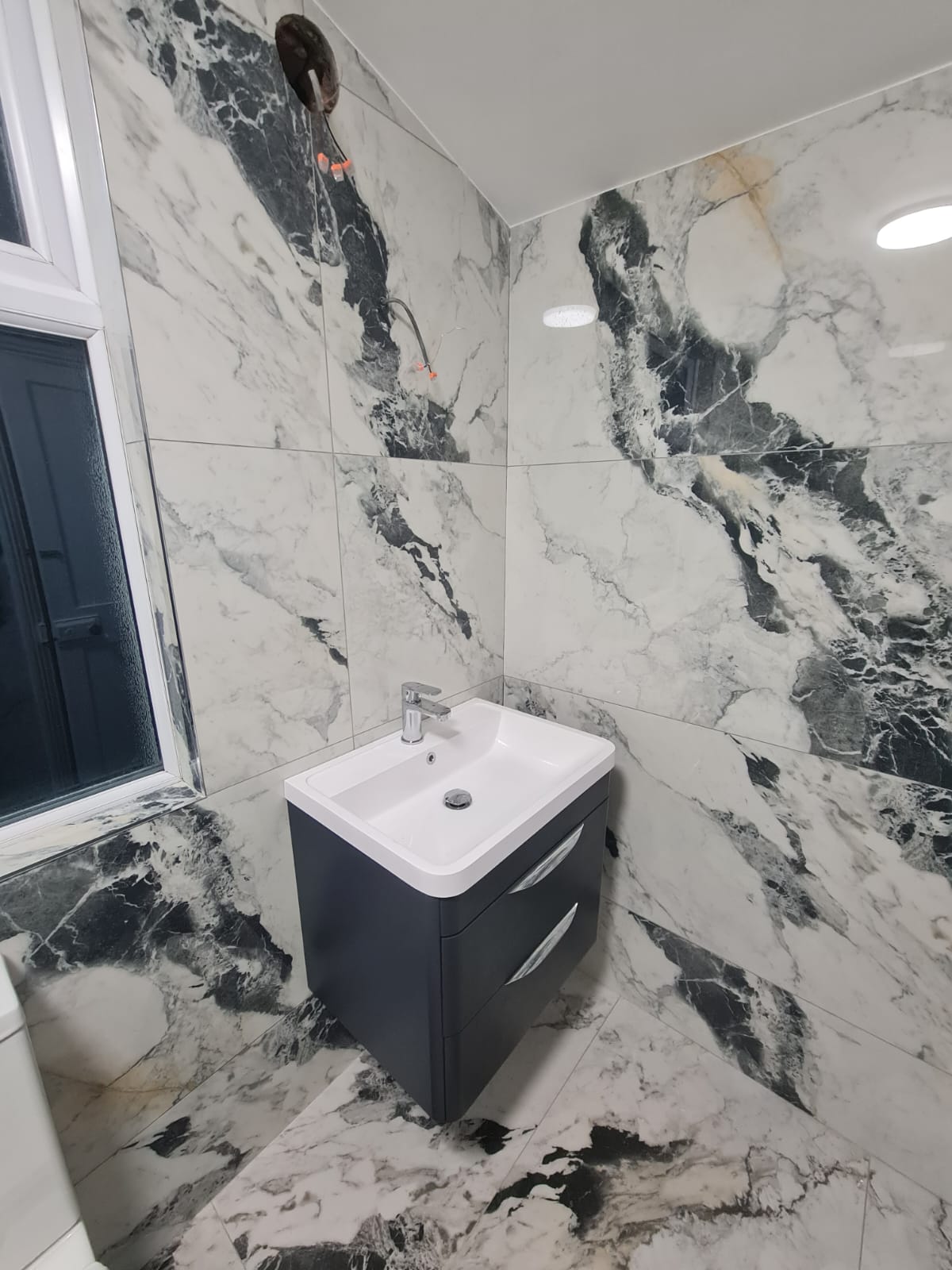
One of the biggest advantages of large tiles is that they reduce visual interruption. Fewer grout joints often make the room feel quieter and more seamless, which can help a bathroom look more premium and better resolved. This is one reason large-format tiles are so popular in more contemporary bathroom design.
In smaller bathrooms, that calmer effect can be especially useful. The room often feels less broken up, which can make it read as more spacious. But the success of that approach still depends on colour, layout and how the tiles are used overall.
If you are planning a compact room, it is worth pairing this with Small Bathroom Design Ideas and Best Tile Colours for a Small Bathroom.
3. Small tiles can add texture, detail and personality
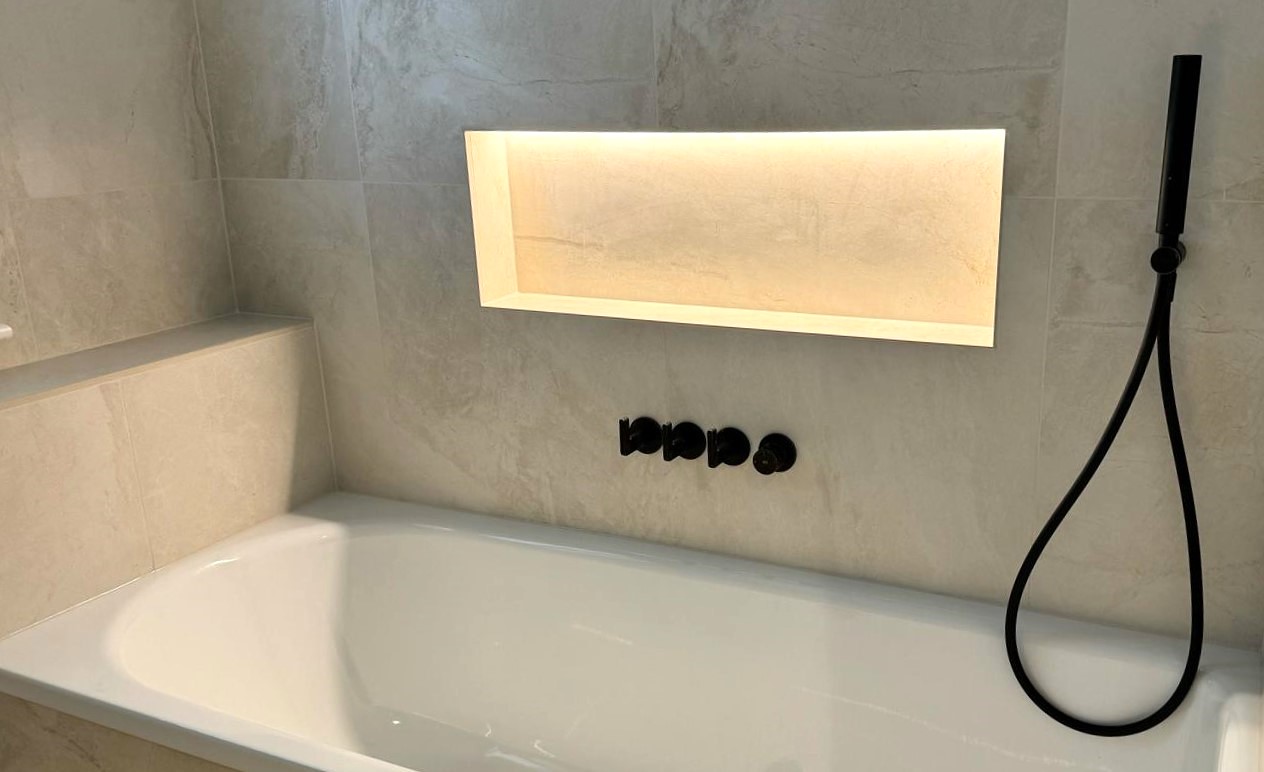
Small tiles are often chosen when the goal is more texture, more pattern or a more detailed finish language. They can work beautifully in the right setting, especially where the bathroom needs more character or where the design direction suits a slightly richer surface treatment.
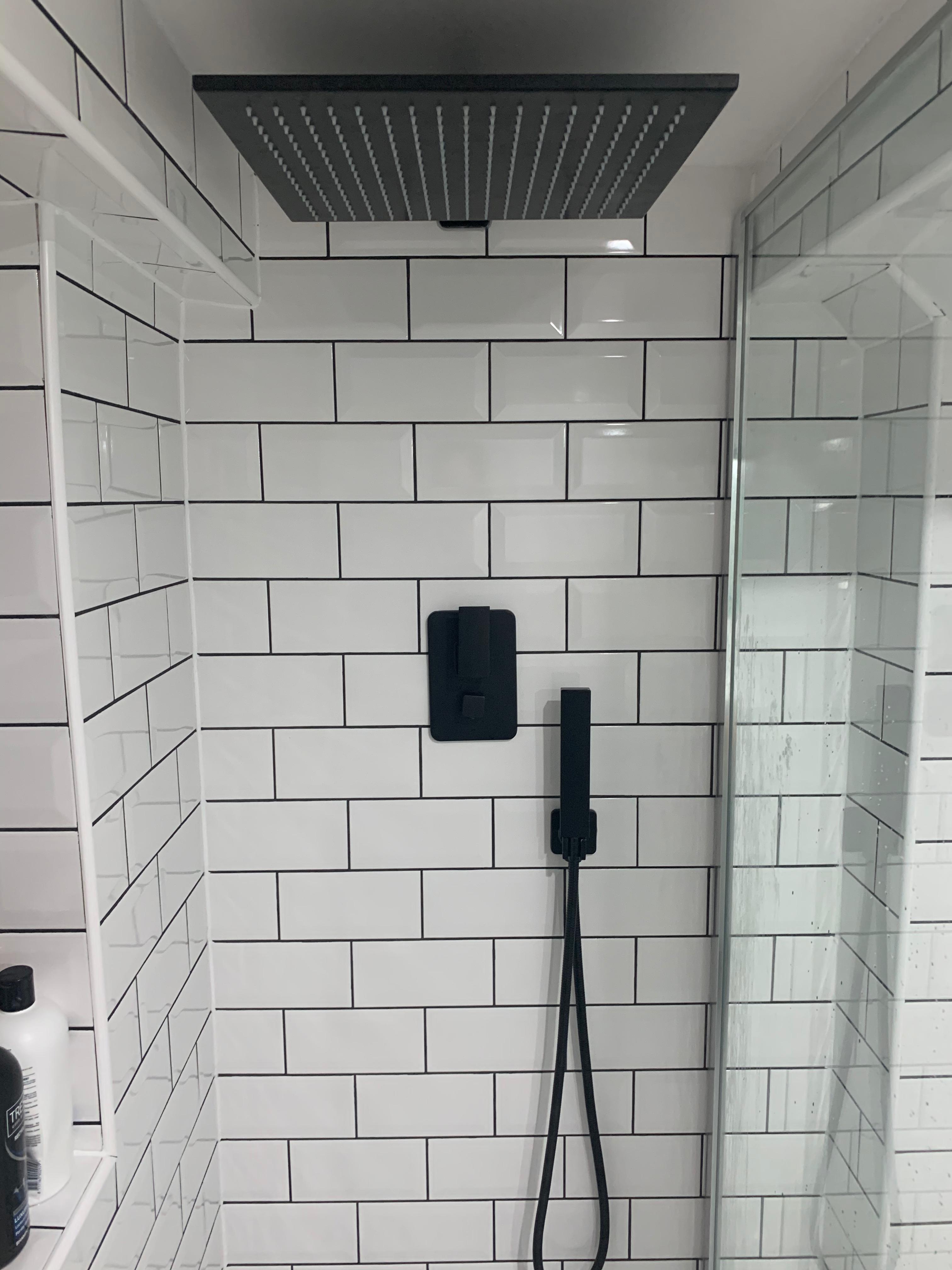
The challenge is that small tiles create more lines, more edges and more visual activity. In a compact bathroom, that can become too much if the rest of the room is already busy. Small tiles usually work best when the overall scheme stays disciplined and the room is not trying to do too many things at once.
4. Large tiles are not automatically better for every small bathroom
It is true that large tiles often help a small bathroom feel calmer, but that does not mean they are always the right choice. A very large tile in a very awkward room can sometimes feel too dominant or overly stark if the palette and detailing do not soften it properly.
In some bathrooms, a smaller format used with control can actually feel more balanced. The key is not simply to choose the largest tile possible. The key is to choose a scale that feels proportionate to the room and works with the overall design direction.
5. Grout changes the effect of both large and small tiles
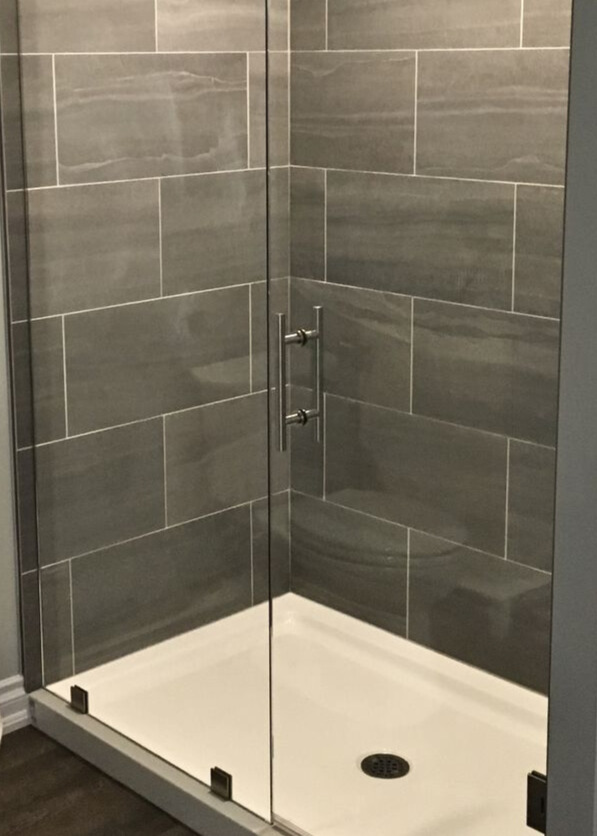
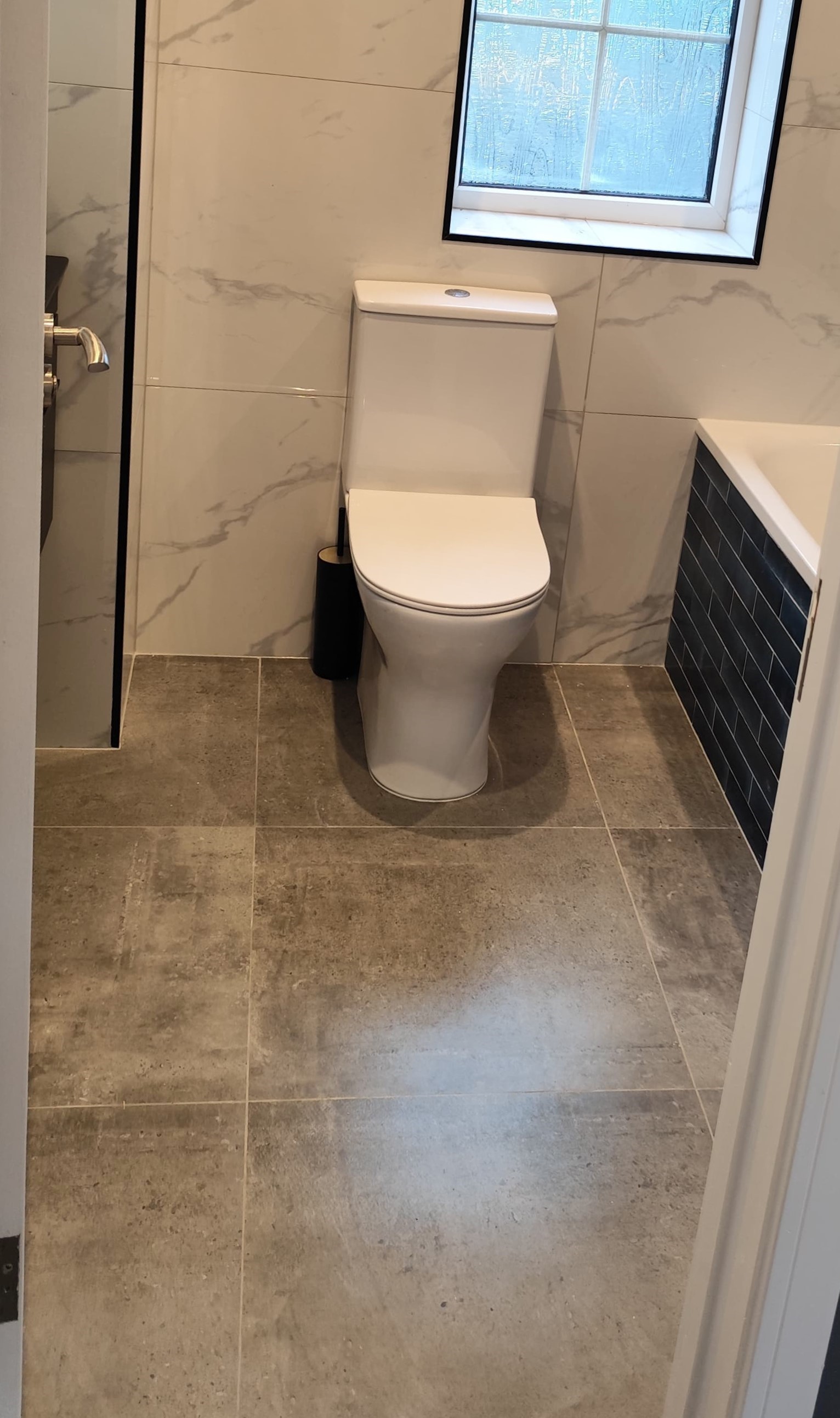
Grout is a major part of this decision. A large tile with tonal grout can feel especially clean and seamless. A small tile with contrasting grout can feel very structured and decorative. The same tile size can therefore create completely different results depending on how the grout is handled.
In bathrooms where calm visual flow matters most, tonal grout often supports the tile better. Where more texture or graphic definition is wanted, stronger grout contrast may be more appropriate. The important thing is to choose it deliberately.
6. Wall tiles and floor tiles do not always need to match in size
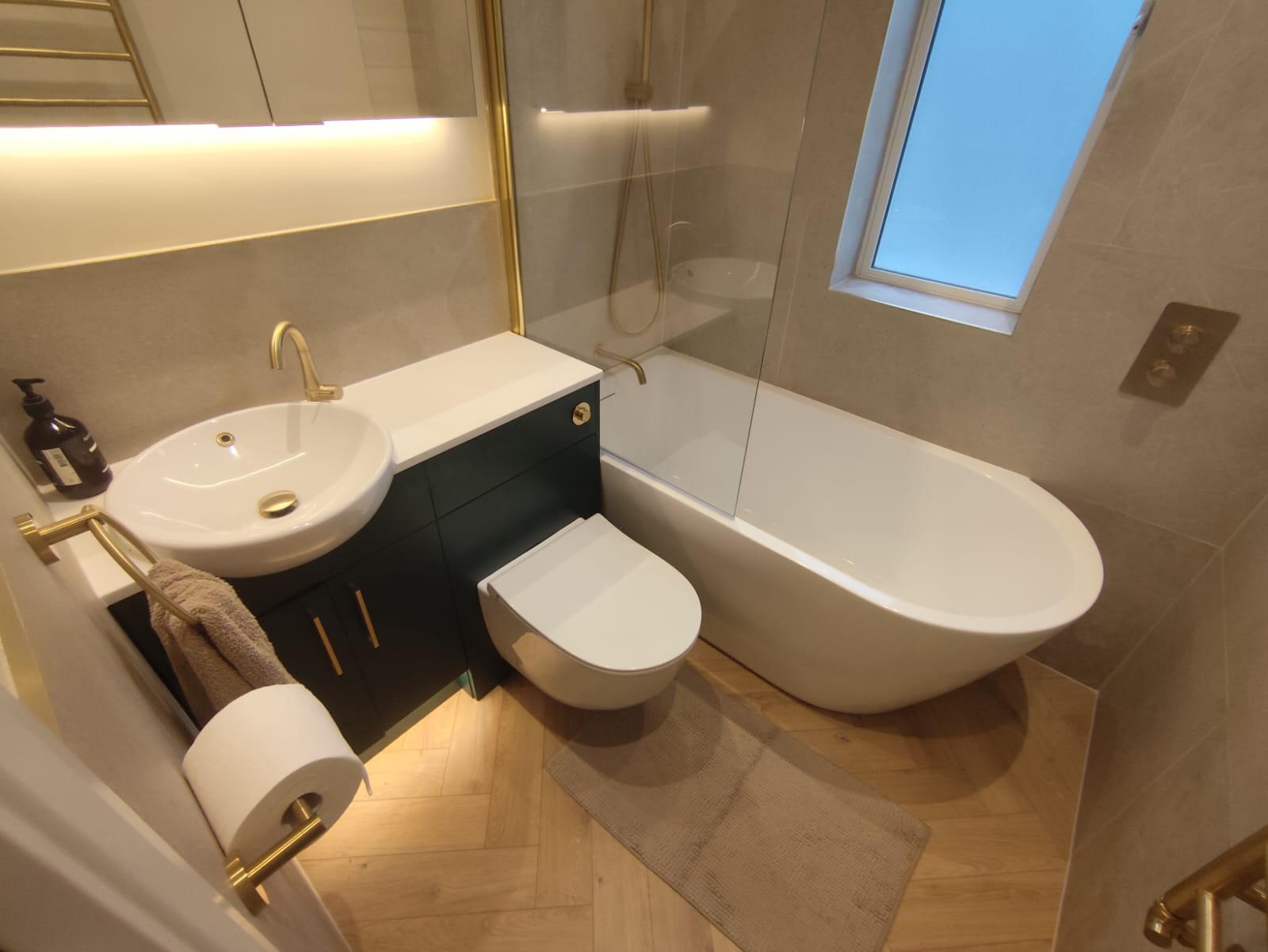
Another common assumption is that every tile in the room should be the same size. Sometimes that works beautifully, especially in cleaner, more minimal bathrooms. But it is not the only option. A bathroom can still feel very coherent if wall and floor tiles differ in scale, as long as the visual relationship remains calm and intentional.
The strongest schemes usually choose one dominant tile language and let the supporting surfaces reinforce it rather than compete with it.
For the wider finish strategy, continue with Bathroom Tile Ideas.
7. Small tiles often suit feature areas better than full-room coverage
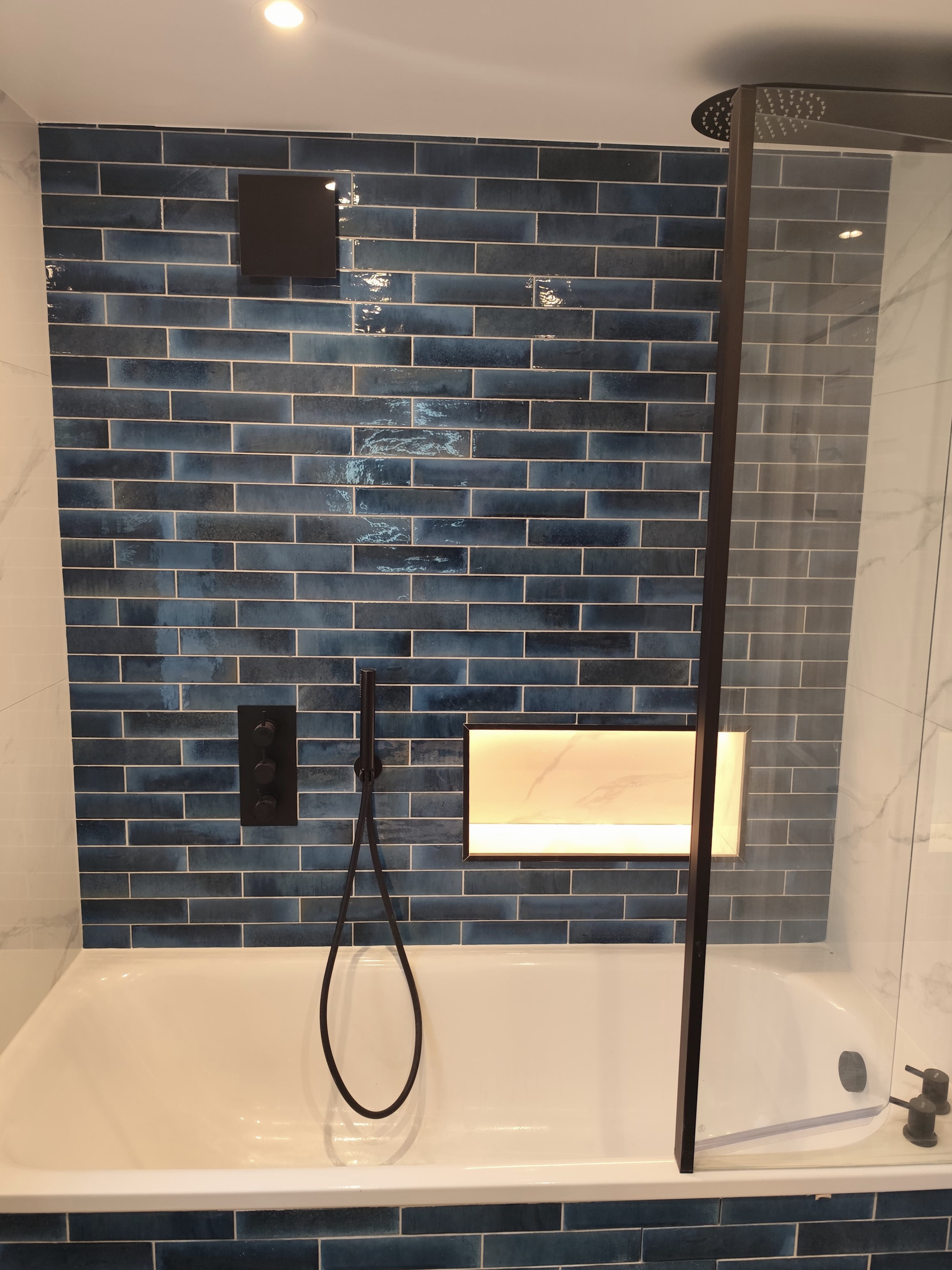
In many modern bathrooms, smaller tiles work best when they are used selectively. A shower niche, a single feature wall or a controlled accent area can carry the additional texture without overwhelming the whole room. This often gives you the character of small tiles without making the entire bathroom feel overworked.
That is often a stronger move than tiling every surface in a smaller format when the room is already compact.
8. Cleaning and maintenance can feel different too
Tile size also changes the day-to-day experience of the bathroom. Smaller tiles mean more grout lines, which can increase the sense of detail but also the amount of visible surface pattern and maintenance attention. Larger tiles usually feel simpler and more streamlined in everyday use.
This does not make small tiles impractical, but it does mean the choice should be made with realistic expectations about upkeep and visual density.
9. The best choice is the one that supports the full room
This is the most useful test. Does the tile size make the bathroom feel calmer, more balanced and more premium? Does it work with the room shape, the colour palette and the lighting? Does it support how the bathroom should feel rather than distracting from it?
In many bathrooms, large tiles are the easier route to visual calm. In others, smaller tiles bring exactly the right amount of character. The correct answer is not about trend. It is about whether the full room becomes more successful.
Large tiles vs small tiles at a glance
- Large tiles are usually best for: calmer visual flow, more minimal bathrooms, cleaner contemporary schemes and smaller rooms that need less interruption.
- Small tiles are usually best for: texture, detail, controlled feature areas and bathrooms that can handle more visual richness.
- Large tiles can be weaker when: the room needs more softness or the scale feels too stark for the space.
- Small tiles can be weaker when: the bathroom is already compact and the extra pattern makes it feel busier.
Common mistakes when choosing tile size
- Assuming large tiles are always better for every small bathroom.
- Using small tiles everywhere in a room that already feels visually busy.
- Ignoring how grout tone changes the whole effect of the tile size.
- Choosing tile size in isolation from colour, lighting and layout.
- Forgetting that the shower area often needs a slightly different strategy from the wider room.
Need help choosing the right tile direction for your bathroom?
Answer a few quick questions about your layout, style and priorities to get a free bathroom planning report with more tailored guidance.
Get Your Free Bathroom Planning ReportRelated planning guides
Smarter bathroom planning, design inspiration and fitting guidance for London homeowners.
© Copyright 2026 Bathroom Converter. All rights reserved