Arrangement 1 — Light above the mirror
Check the face from the user's normal position; light from above alone may leave shadows beneath facial features.
2 March slots left • April diary now open
Good mirror lighting helps you see your face clearly without harsh shadows or glare. Compare light above the mirror, balanced side lights and front-facing integrated lighting at the position where you actually stand or sit. A glowing mirror is not automatically a good task light.
Use the mirror area as the task-lighting test: can each person shave, apply makeup or carry out their usual routine comfortably? Check your face with the general ceiling lighting both on and off. The aim is useful, balanced illumination rather than the brightest-looking mirror.
This guide focuses on the face and vanity. Bathroom Lighting Ideas covers the wider layers; Bathroom Lighting Positions is the companion for location and technical planning.
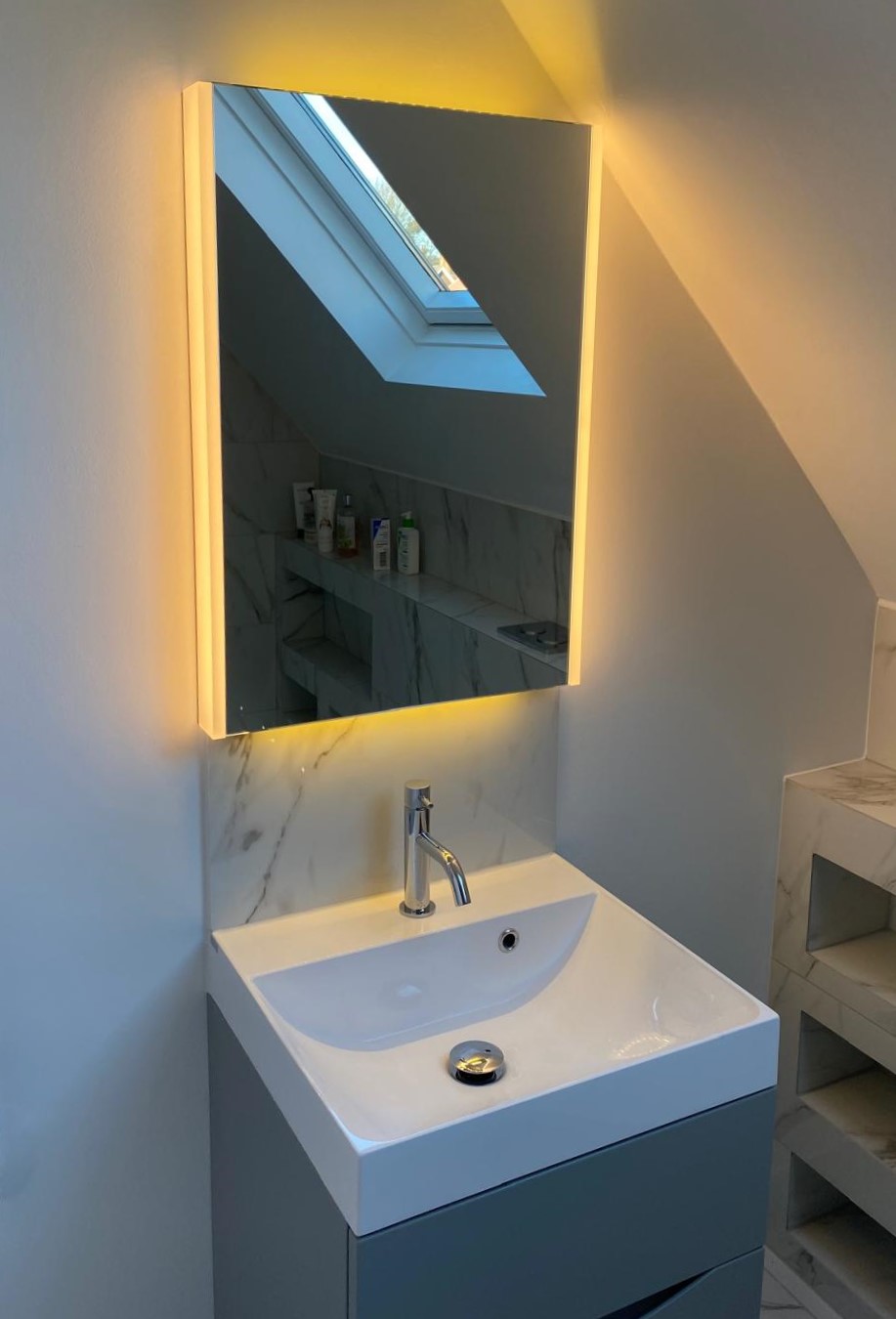
Check the face from the user's normal position; light from above alone may leave shadows beneath facial features.
Balanced side light can reduce strong side shadows; check glare, symmetry and how each person uses the mirror.
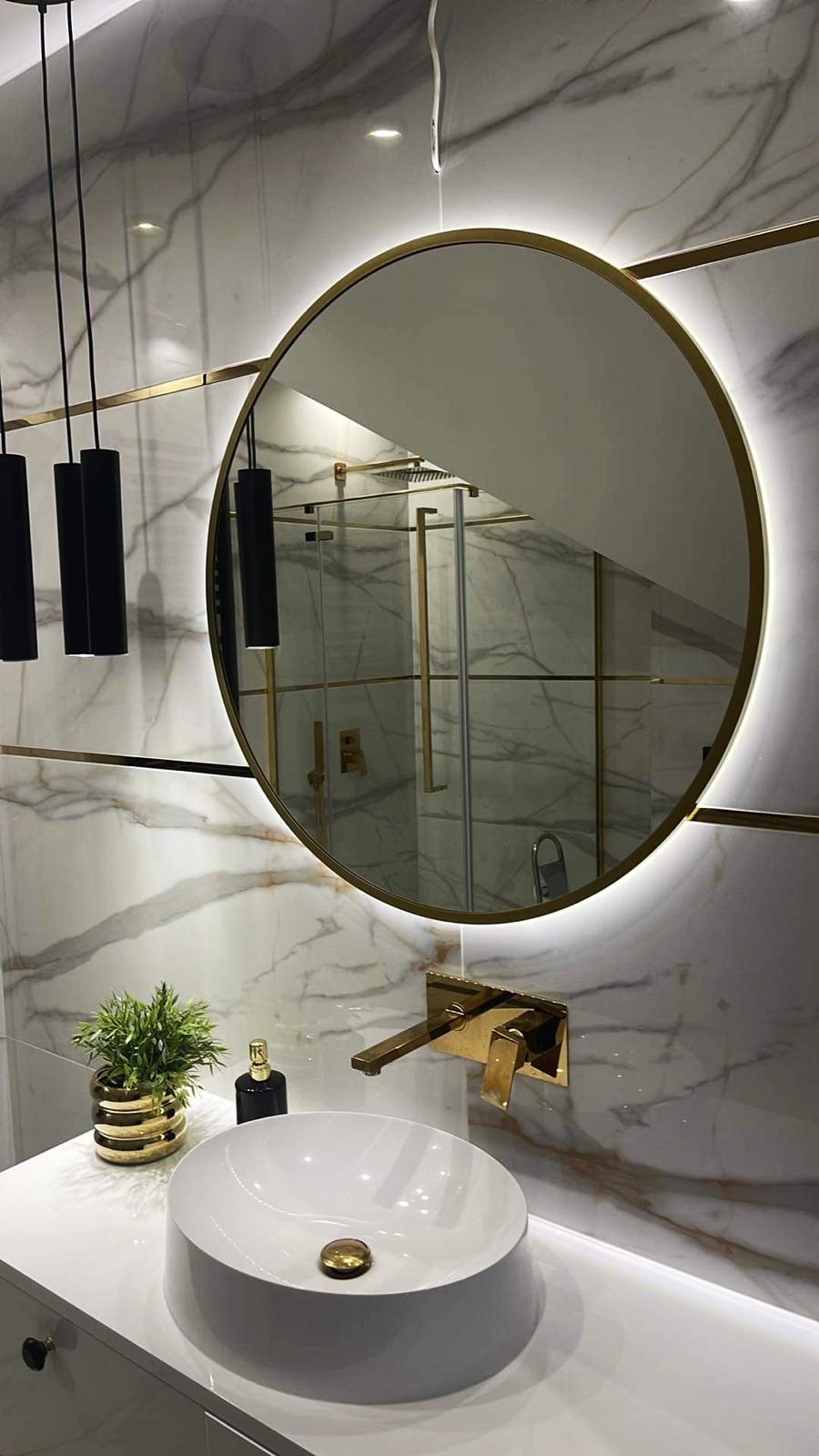
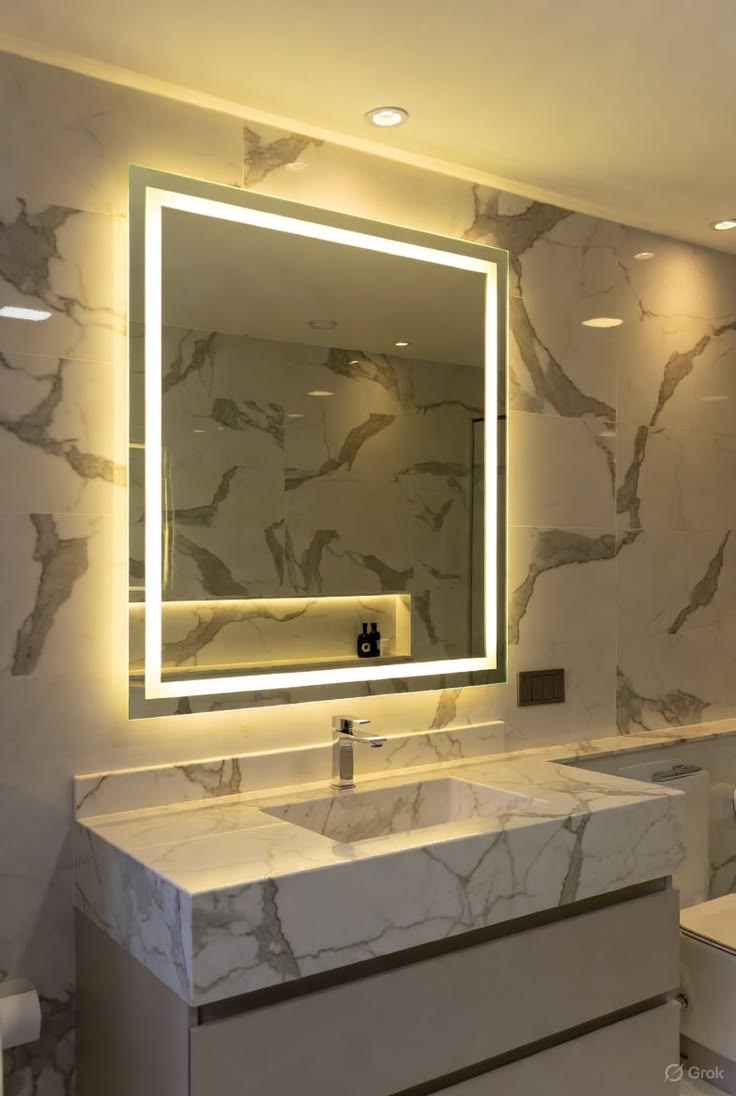
Separate useful front-facing illumination from a rear halo: a decorative glow does not automatically light the face well.
| Arrangement | What it can offer | What to test |
|---|---|---|
| Light above the mirror | A compact fitting where there is little side space. | Check shadows below the eyes and chin at the normal viewing position; a bright bar does not guarantee even facial light. |
| Vertical or side lights | Light from both sides can balance illumination across the face. | Allow for the mirror, cabinet doors and users’ viewing positions; check glare from visible sources. |
| Front-facing integrated lighting | Task light and mirror can form one assembly with fewer separate fittings. | Check the actual face illumination. A rear halo mainly lighting the wall is a different effect. |
Astro’s bathroom-lighting guide distinguishes illumination from both sides of the face from a rear ambient wash. Test the chosen fitting rather than assuming every integrated mirror behaves alike.
The mirror zone is where the bathroom becomes most personal and functional. If the light is poor here, daily routine becomes less comfortable almost immediately. The room may still look attractive overall, but the part of the bathroom that matters most in practical terms will feel weaker than it should.
This is one reason mirror lighting deserves more thought than people often give it. It does not just affect how the mirror looks. It affects how the bathroom works.
Stand or sit where the mirror will be used and look at the eyes, nose and chin. A concentrated overhead source can leave these areas shaded; a very exposed source may glare in the mirror. Check both the light reaching the face and what is reflected back towards you.
A broad, diffused arrangement can feel more comfortable, but do not judge it from a photograph alone. Try a showroom demonstration or obtain the manufacturer’s information for the actual fitting.
An illuminated strip facing the user and a halo behind the mirror do different jobs. A rear glow can soften the wall and create atmosphere, while face illumination depends on how the product directs its light. Some mirrors provide both; others mainly provide an ambient effect.
Ask to see the mirror used for a grooming task. Check the switches, available light settings and servicing information as well as its appearance. Keep the existing mirror photographs as examples of design, rather than proof of a particular output.
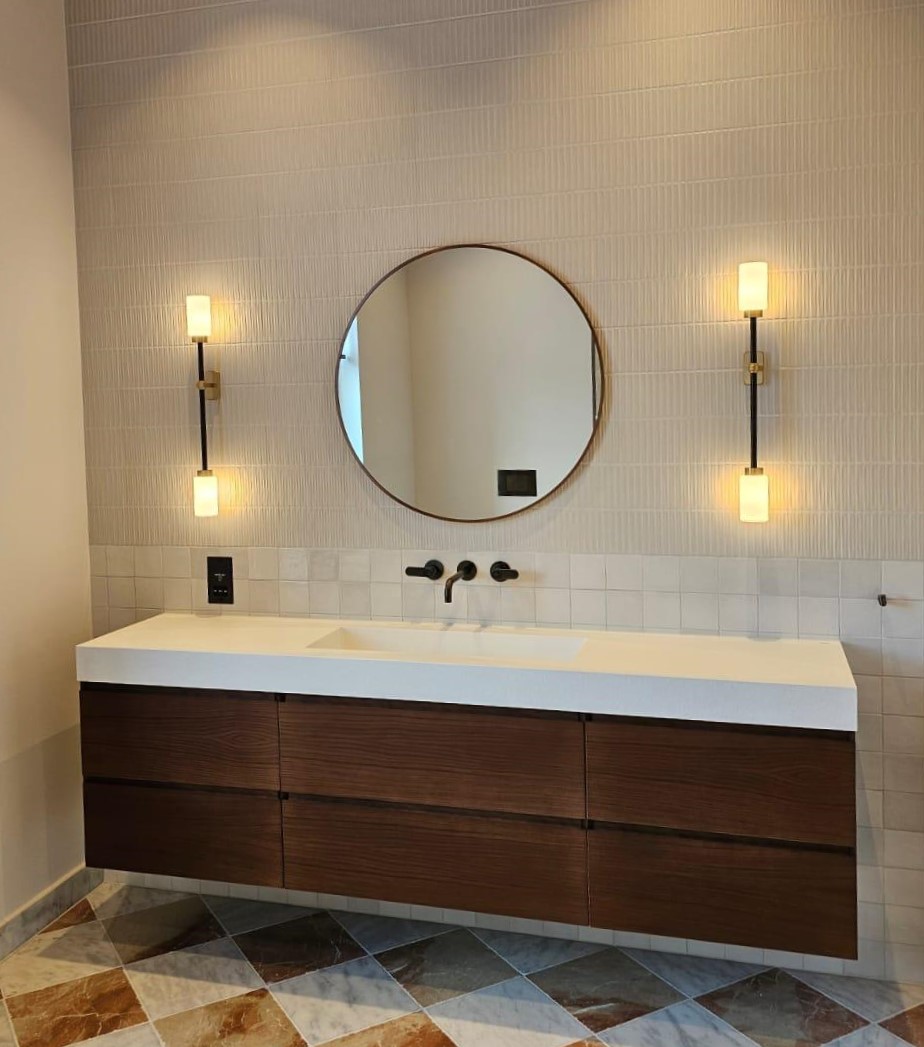
Integrated lighting is not the only good answer. Thoughtfully placed wall lights can also work extremely well around a bathroom mirror. In some bathrooms, they create a more layered and more characterful result while still delivering strong practical light.
The important thing is that the lights should support the mirror properly. They need to feel proportionate to the wall, the vanity and the wider room rather than like decorative objects placed without enough consideration.
Draw the mirror and vanity together with any cabinet doors or side shelves. Check that a door does not strike a fitting, shade the face when open or hide a control. Compare the arrangement for the people using it rather than specifying a universal mounting height.
Have the electrician confirm the proposed locations, fittings and controls for the bathroom. Electrical Safety First recommends a registered electrician for electrical installation. For the technical companion, see Bathroom Lighting Positions.
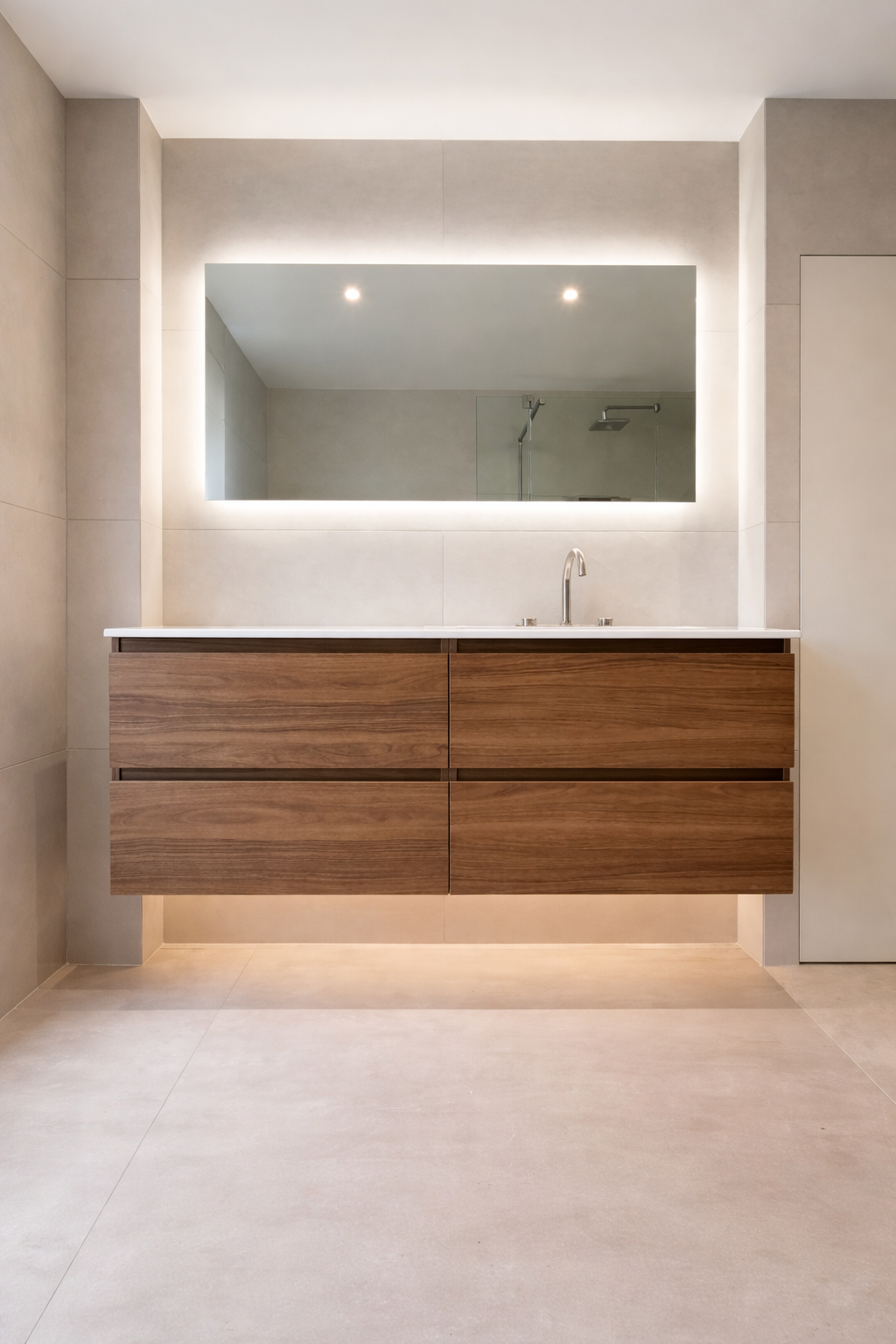
Light changes how materials are perceived. Stone-look tiles, timber details, painted walls, brass accents and vanity finishes all respond differently depending on the quality and softness of the lighting around them. A good mirror light helps those finishes feel better rather than washing them out or making them feel too hard.
This is one reason mirror lighting should be chosen as part of the bathroom design, not added afterwards as a generic solution. It has a strong effect on the room’s mood and finish quality.
For the finish side, see Tiles & Finishes and Can You Use Wood in a Bathroom?.
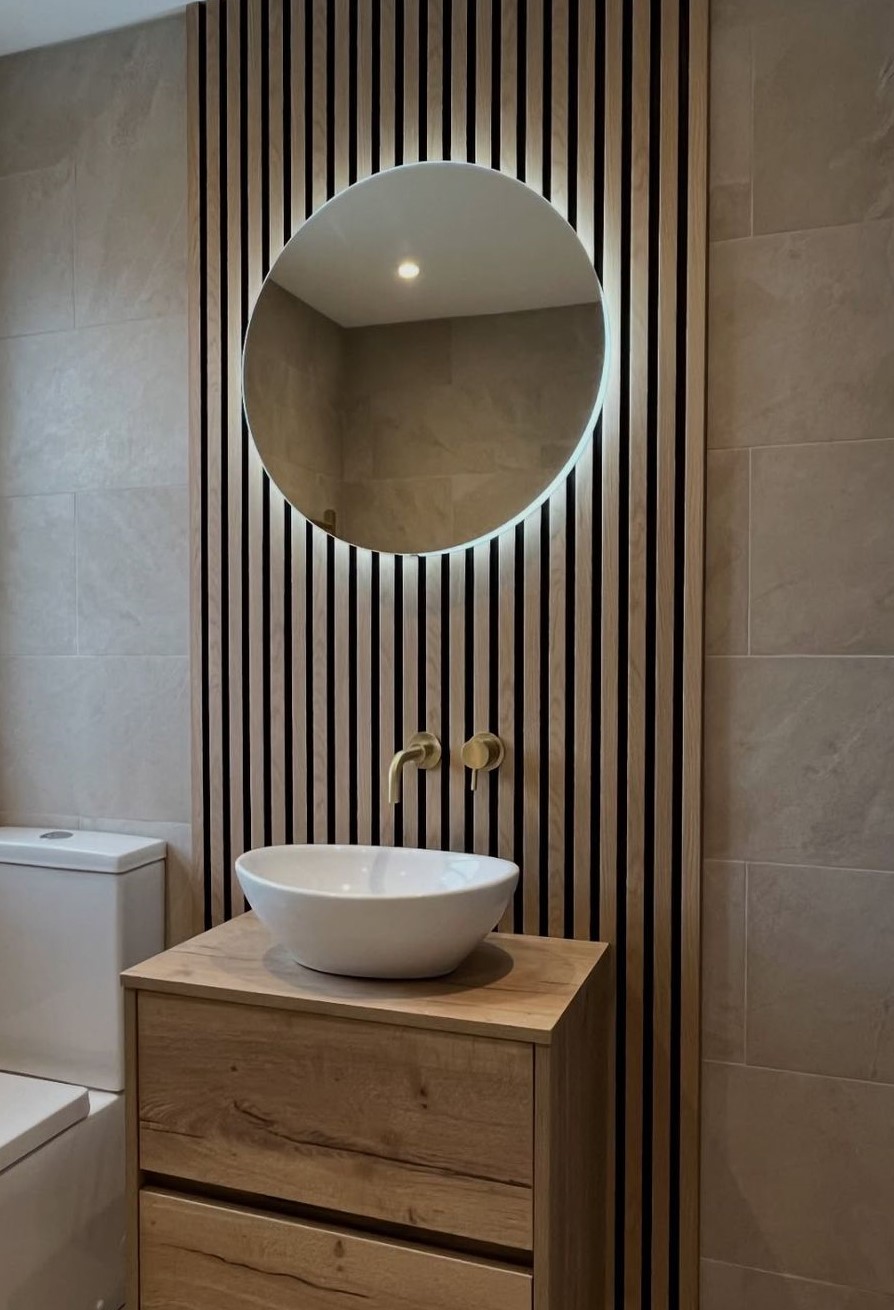
In a compact bathroom, the mirror and vanity area carry even more weight because they often dominate the main visible wall. When the lighting in that area is good, the whole room can feel more open, more balanced and easier to use. When it is weak, the bathroom can feel darker and more compromised than it needs to.
This is why mirror lighting is often one of the highest-value upgrades in a small bathroom. It supports both function and visual spaciousness at the same time.
For compact-room planning overall, continue with Small Bathroom Design Ideas.
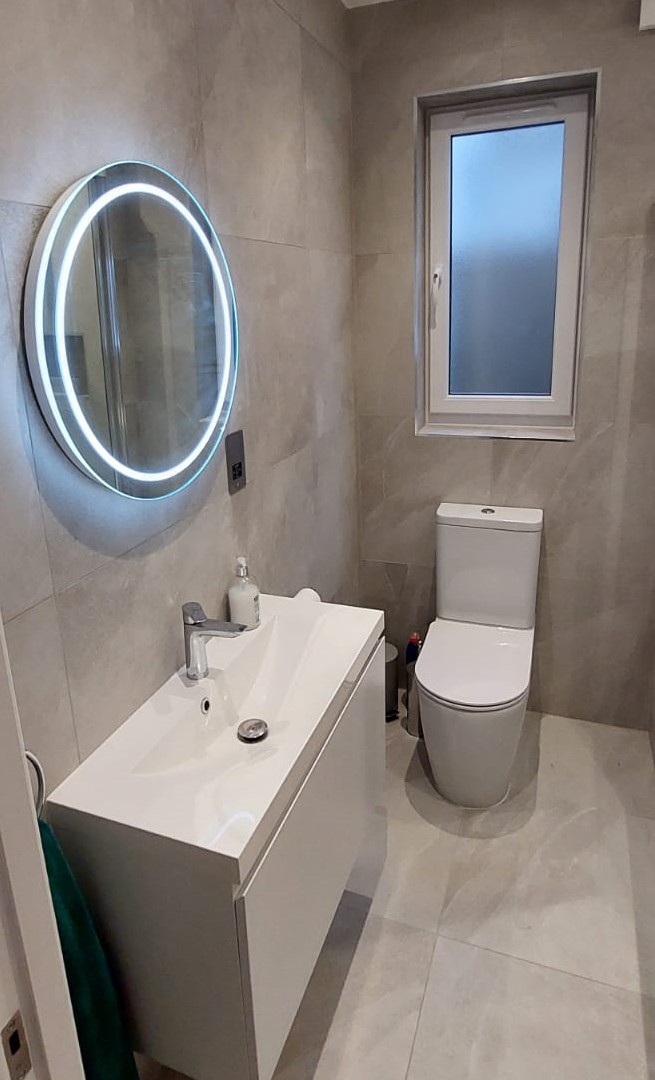
In many bathrooms, the mirror area also overlaps with storage decisions. A mirror cabinet, side shelving or integrated vanity storage all affect how the lighting should be handled. The goal is to keep the area practical without letting it become visually crowded.
When mirror lighting and storage work together, the bathroom feels more organised and more premium. When they compete, the space can quickly feel fussy or overworked.
If that part of the room matters in your project, read Bathroom Storage Ideas That Improve Everyday Use .
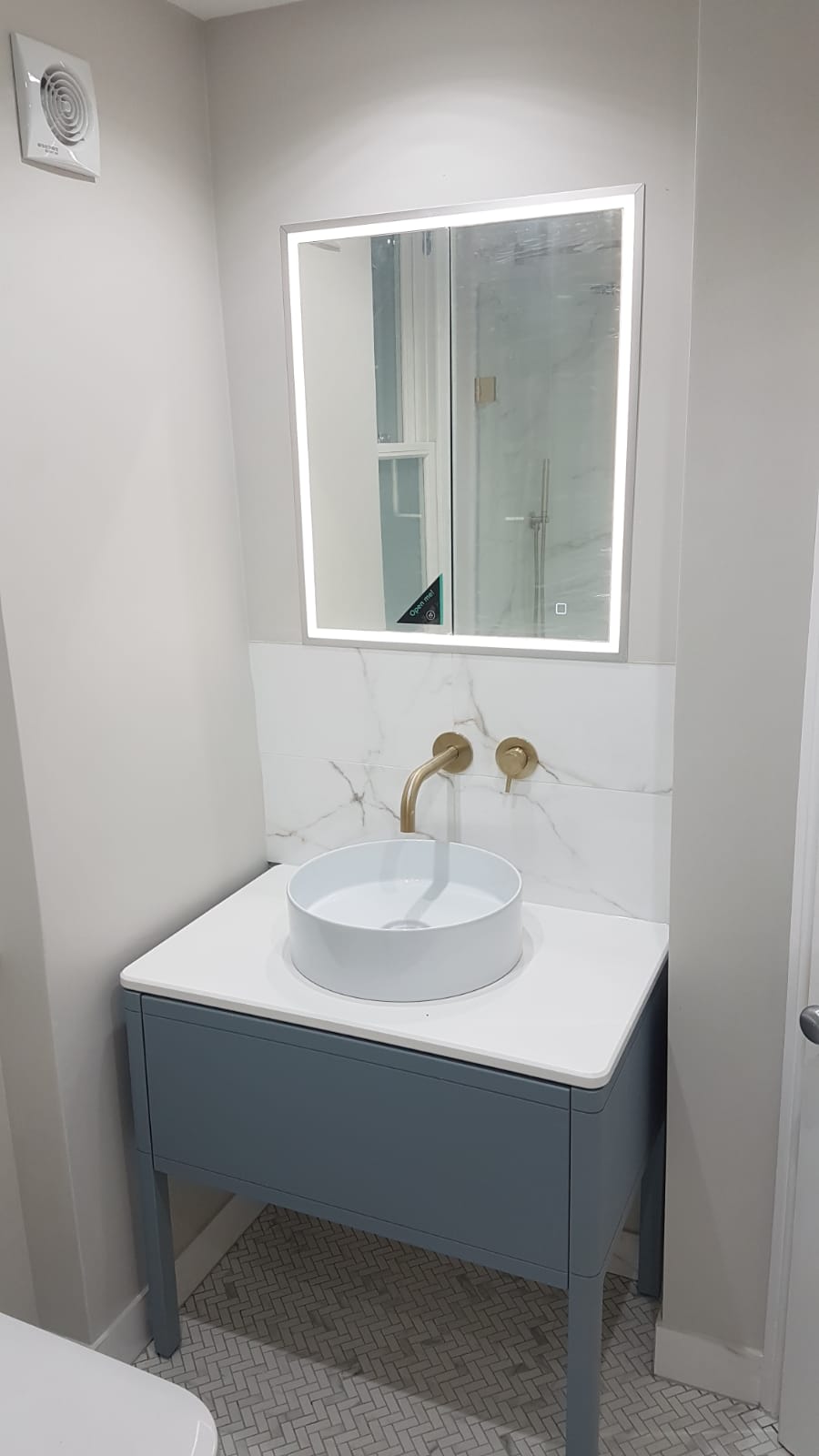
Confirm the face is easy to see, sources do not glare in the mirror, cabinet doors still work, and the ceiling light complements the task light. If judging skin tones or makeup matters, ask for the product’s colour-rendering information and compare a demonstration; colour temperature alone does not describe that performance.
No one fitting suits every user or room. Test the selected mirror-light combination and have its bathroom suitability confirmed before purchasing.
Coordinate the mirror, storage and fixture positions before first-fix decisions. Use your free Bathroom Converter planning report to organise the whole room, then confirm the electrical specification with your electrician.
Get Your Free Bathroom Planning Report
Online bathroom planning for UK homeowners.
Planning guidance only. Specialist confirmation required before design, quoting or installation.
© Copyright 2026 Bathroom Converter. All rights reserved