2 March slots left • April diary now open
Shower Niche vs Shelf: What Works Better in Real Life?
A built-in shower niche is a construction decision: plan its wall opening, waterproofing connection and tile layout before the wet area is finished. A surface-mounted shelf can often be a later, lower-intervention option, but its fixing method still needs checking. Choose around the wall, the products you store, reach and cleaning—not simply whether recessed storage looks more premium.
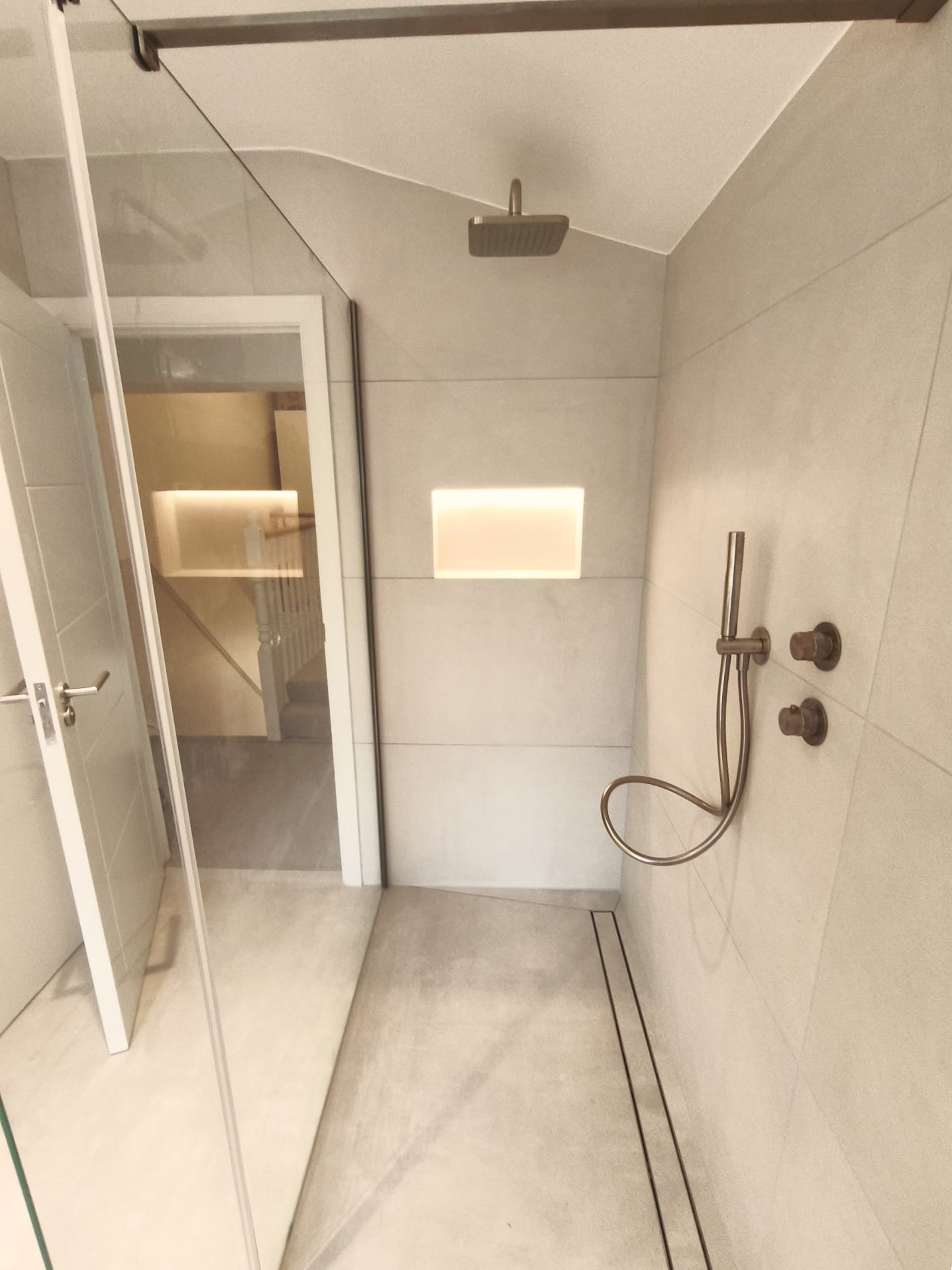
Many bathroom decisions are judged too quickly by appearance alone, and shower storage is a perfect example. A niche often looks more built-in and premium in photos, so people assume it is automatically the better solution. Sometimes it is. But sometimes a shelf is simpler, more practical and more appropriate for the room.
The best answer usually comes from understanding what the shower needs to do, how the tiling is being planned and whether the storage should visually disappear into the design or stay more obviously separate. A niche and a shelf can both work well. The difference is how naturally they fit the room.
Key takeaways before choosing
- A shower niche usually feels more integrated and premium when planned properly.
- A shelf can be a simpler and sometimes more practical option depending on the room.
- The best choice depends on tile layout, wall construction, waterproofing and everyday use.
- A niche should be planned early or it can create awkward compromises later.
- The right shower storage should improve the room quietly, not fight against the design.
1. A niche usually feels more built into the design
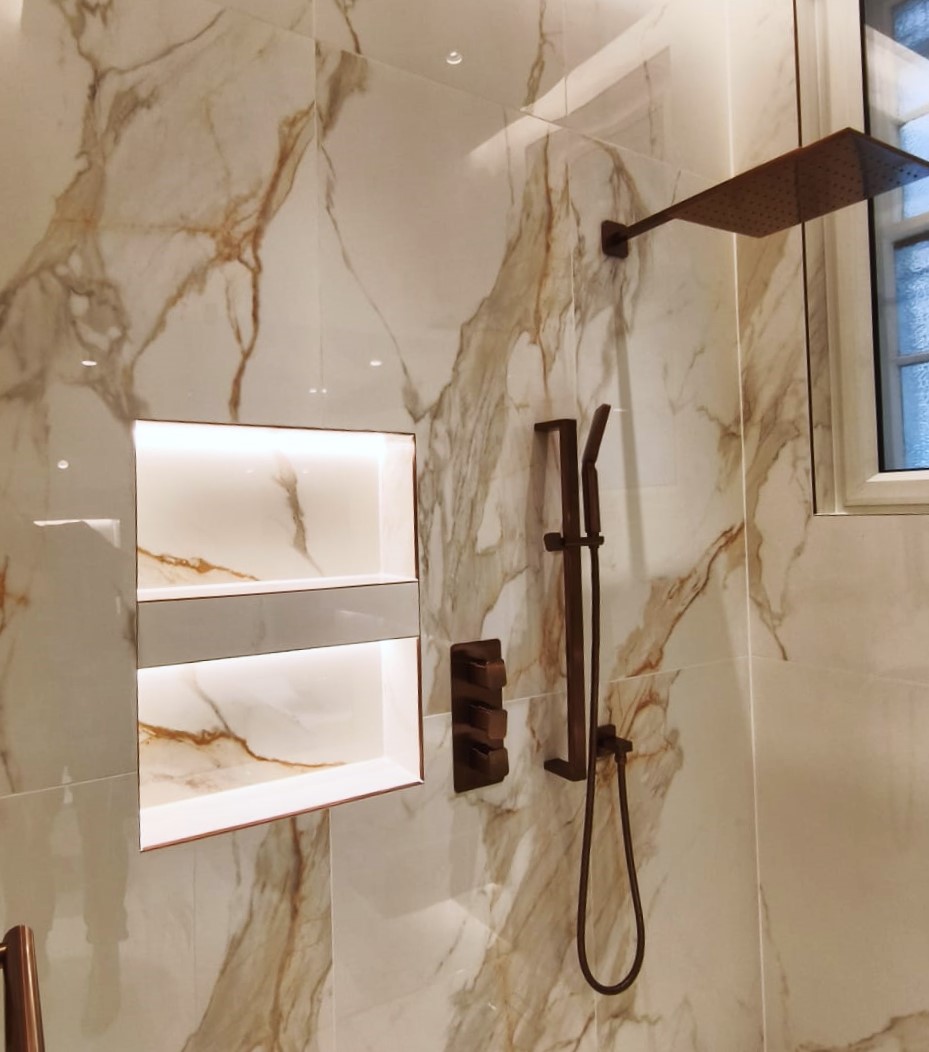
One of the biggest advantages of a shower niche is that it can feel like part of the architecture of the room rather than something added afterwards. When it is positioned well and tiled cleanly, it often makes the shower feel more refined and intentional. This is one reason niches are so popular in more premium bathrooms.
They also help reduce visual clutter because the products sit inside the wall plane rather than projecting into the shower area. In tighter bathrooms, that cleaner look can make a noticeable difference.
2. A shelf can still be the better option in some bathrooms
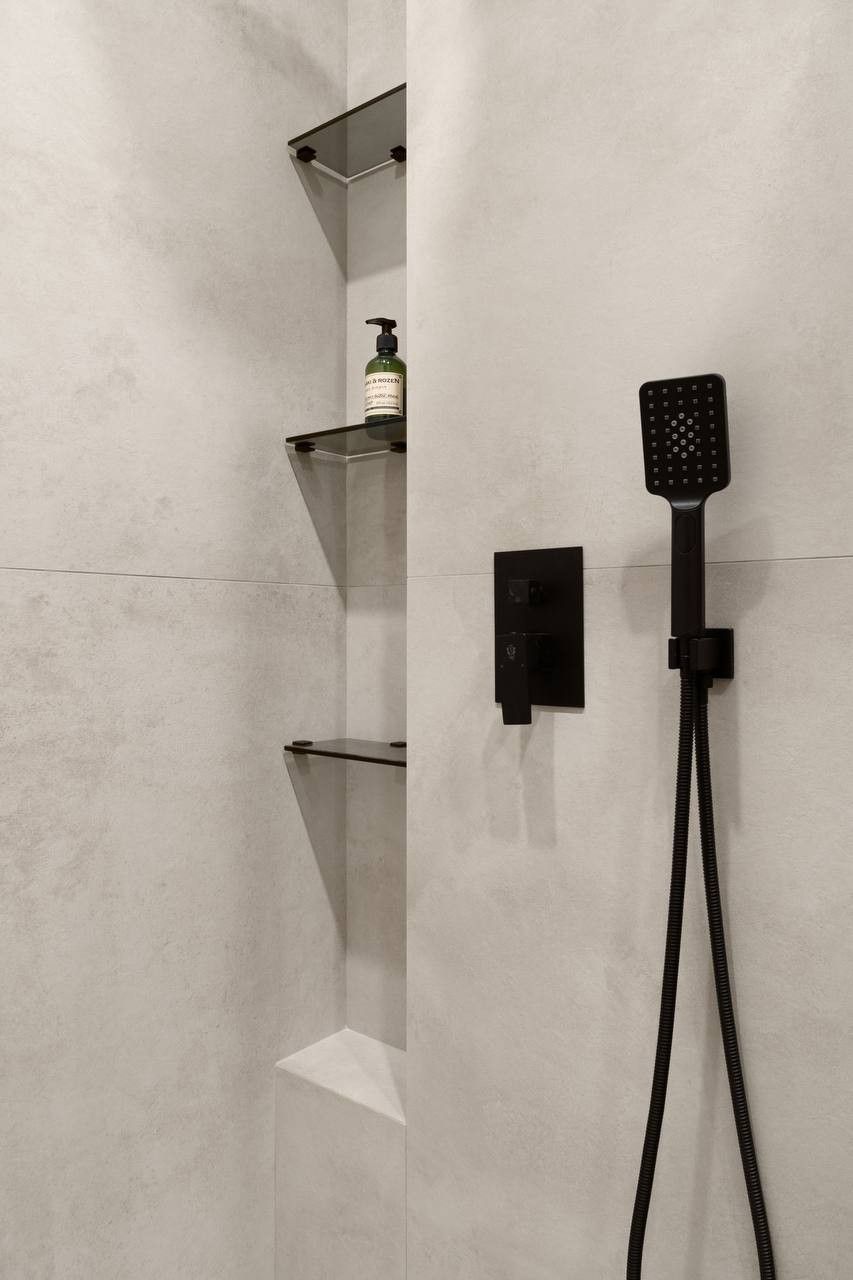
A shelf should not be dismissed just because it looks simpler. In some bathrooms, it is the more practical choice. A well-designed shelf can be easier to position, easier to access and less dependent on the exact tile and wall strategy. In certain layouts, that makes it a cleaner solution overall.
This is especially true if the shower design is already well resolved and does not need another built-in detail to feel complete. A shelf can also work well when the priority is straightforward usability rather than a more integrated feature look.
3. The tile layout often decides whether a niche works beautifully or badly
This is one of the most important parts of the decision. A shower niche has to work with the tile lines. If it lands awkwardly, cuts through the pattern badly or feels forced into the wall without enough thought, it can make the shower look less refined rather than more.
A niche can look excellent, but only when its size, position and proportions support the tiling strategy. This is why it should usually be designed before the tiler is already deep into the install.
For the wider finish picture, continue with Bathroom Tile Ideas and Large Tiles vs Small Tiles.
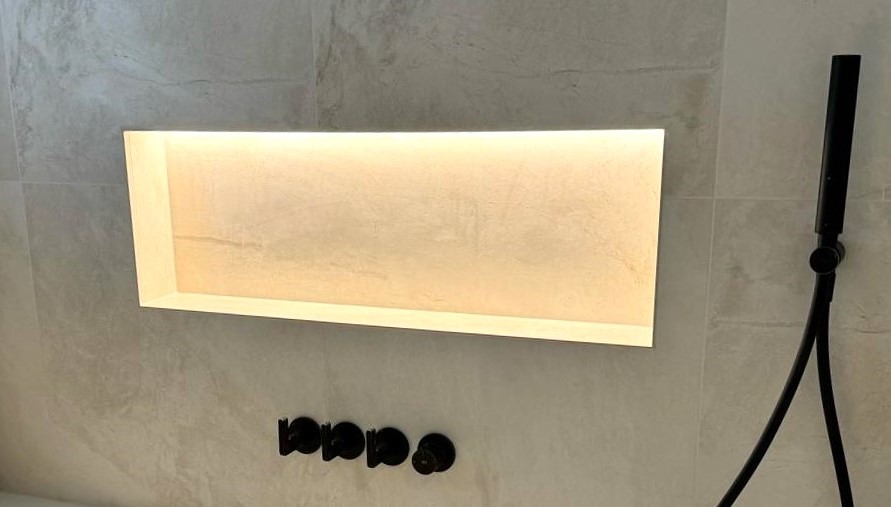
4. Decide on a niche before waterproofing and tiling
A niche recess changes the wall assembly and its connection to the waterproofing system. Choosing it after tiling can mean opening finished work and reinstating that system; it is not a minor accessory swap. A tile-integrated shelf or built-in ledge may also need early planning, so distinguish these from a surface-mounted shelf.
- Before wall preparation: check the wall type, services, available recess depth and support with the installer. Do not assume the wall can be cut wherever the niche looks best.
- Before waterproofing: agree the niche product or construction method, location, junctions and connection to the selected waterproofing system.
- Before tile setting: coordinate the finished opening, tile joints, edges and internal shelf with the actual bottles and user reach.
- For a later shelf: check the product’s substrate, fixing and load requirements. Drilling, bonding or fitting into tile joints are different methods; the installer must confirm suitability without compromising the wet-area assembly.
If the shower is already finished and the main problem is where to put bottles, assess an appropriate shelf before assuming a new recess is worthwhile. For integrated alternatives, see Built-In Shower Shelves. Discuss the interfaces using Bathroom Waterproofing Considerations, and retain What to Plan Before a Bathroom Renovation Starts as your pre-build checklist.
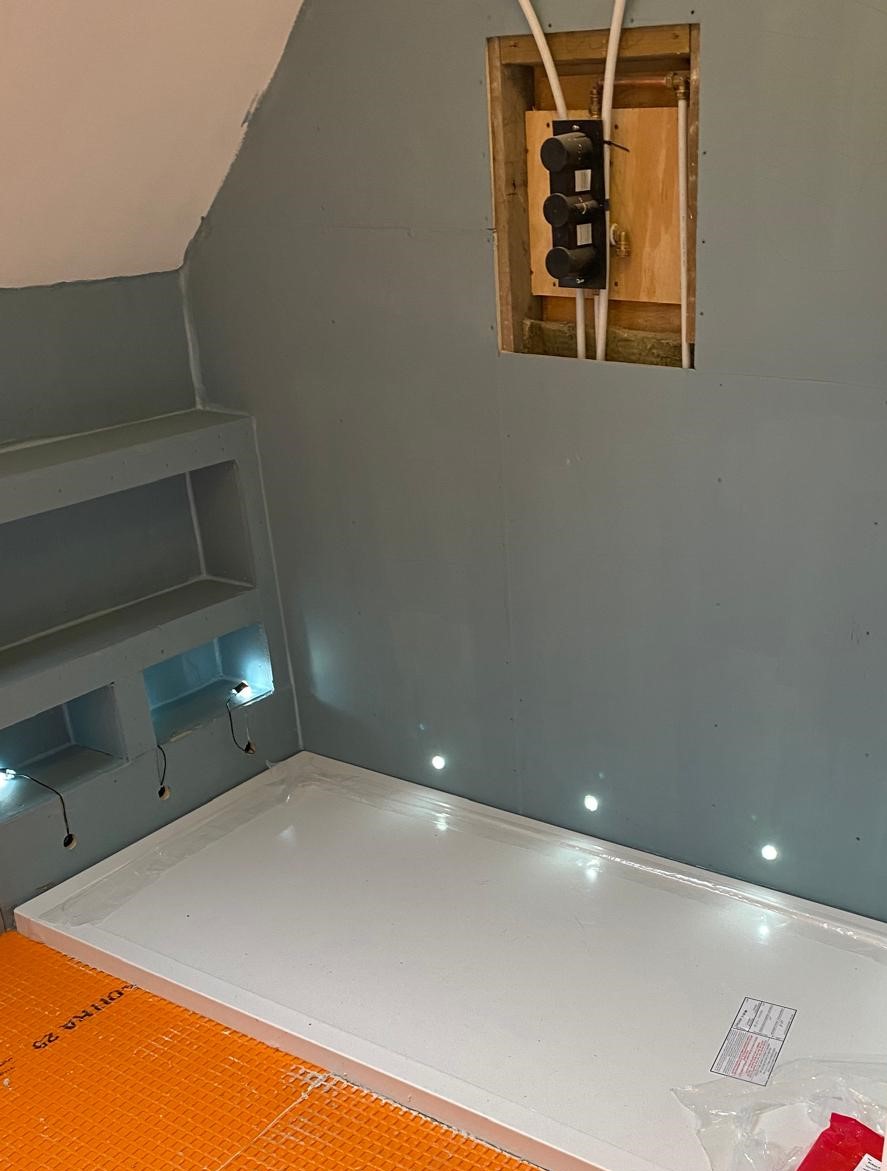
5. Shelves can feel more obvious, but they can also be more flexible
One advantage of shelves is that they can be easier to place exactly where the user needs them. They are often less constrained by the wall structure and may offer more flexibility in positioning. That can be useful where the ideal niche location is technically awkward or would damage the visual order of the shower.
The trade-off is that a shelf is usually more visible. It projects more, feels more like an added element and can make the shower read as slightly less clean if the design is already busy.
6. Cleaning and product clutter matter too
In real life, shower storage has to cope with product bottles, water splash and constant use. A niche can hide that clutter better because it contains the products within the wall. A shelf may make them more visible, especially in a shower that is already open and minimal.
That said, the actual cleaning experience depends on the design. A badly detailed niche can still be awkward to keep looking good. A well-made shelf can be perfectly easy to live with. The right question is not which one sounds more premium, but which one will work best in your room over time.
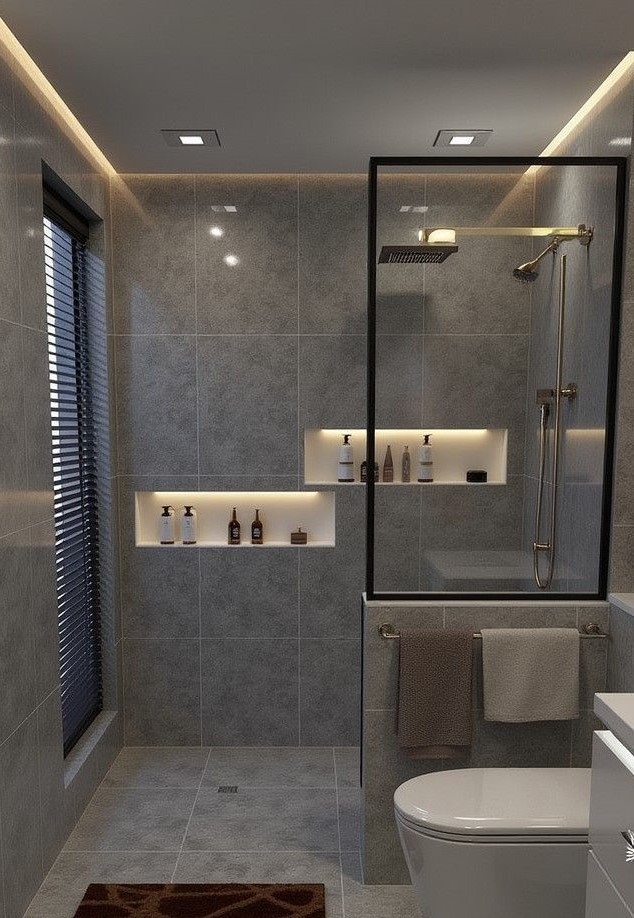
7. A niche often suits more design-led bathrooms
If the bathroom is aiming for a more architectural, integrated and editorial feel, a niche often supports that direction better. It feels quieter, more intentional and less like an accessory. In showers with cleaner tile layouts and stronger finish control, that can be exactly the right move.
This is one reason niches are often associated with higher-end bathrooms. But that effect only works when the execution is equally strong.
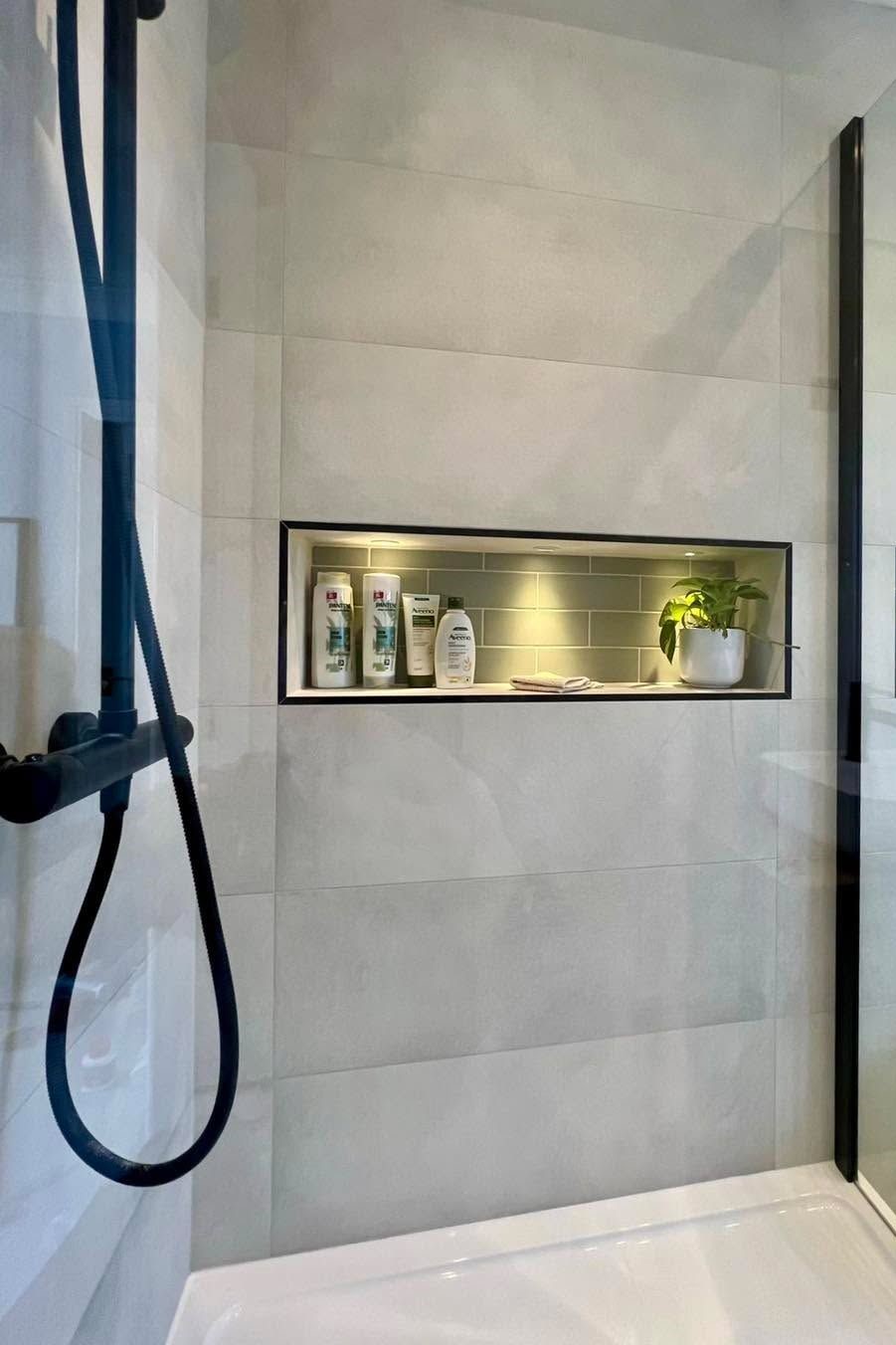
8. The best choice depends on whether the room wants integration or simplicity
This is often the clearest way to frame the decision. If the bathroom wants to feel more built-in, more refined and more integrated, a niche is often the stronger option. If the room wants a simpler, more direct and more flexible answer, a shelf may suit it better.
Neither one is universally right. The success of the bathroom should decide. The better option is the one that supports the room quietly instead of drawing attention to itself for the wrong reasons.
9. Shower storage should be planned with the whole room in mind
A niche or a shelf is not just a shower detail. It affects tile layout, visual rhythm, waterproofing, ease of use and how premium the bathroom feels overall. That is why the decision works best when it is tied into the wider bathroom planning process rather than made in isolation.
If the bathroom already has a strong layout, calm finish scheme and good lighting, the right shower storage detail can quietly strengthen all of it.
For the wider room context, continue with Bathroom Storage Ideas That Improve Everyday Use and Lighting, Storage & Features.
Shower niche vs surface-mounted shelf: practical comparison
| Decision | Built-in niche | Surface-mounted shelf |
|---|---|---|
| Construction timing | Ideally agreed before waterproofing and tiling, with the wall opening and system connection planned. | Often possible later if the selected fixing method suits the existing substrate and wet-area finish. |
| Placement | Constrained by wall construction, services, recess depth and tile layout. | Can offer more positioning flexibility, but projections and fixings must not obstruct use or damage concealed services. |
| Storage capacity | Check finished internal dimensions, tall bottles, pump use and any divider; the recess size alone is not enough. | Check usable depth, edge restraint and the product’s rated load against the bottles actually used. |
| Cleaning | Corners, joints and the base need to be reachable and detailed to avoid water sitting. | The top, underside, brackets or joints must be cleanable; check whether removal is permitted by the product design. |
| Waterproofing | The niche-to-wall connection is part of the specified wet-area system. | Any penetrations or bonded interfaces need a suitable, product-specific fixing approach. |
| Future change or repair | Changing the opening or a tiled-in shelf may disturb tiles and waterproofing. Keep product and installation records. | Some products are easier to replace, but old fixings, holes or bonded areas may still need making good. |
Use the household’s actual bottles to test capacity and reach. Keep storage away from awkward screen movement or a place where users need to twist under the spray. If the proposed niche location is technically difficult, a well-positioned shelf can be the more sensible decision.
Common mistakes when choosing shower storage
- Adding a niche too late without checking tile alignment and waterproofing implications.
- Assuming a niche is always better just because it looks more premium in photos.
- Choosing a shelf that projects awkwardly into a tighter shower layout.
- Ignoring how visible product clutter will affect the room visually.
- Treating shower storage as a minor detail instead of part of the overall bathroom design.
Need help planning the right details for your bathroom?
Plan shower storage alongside the room layout and everyday routine in your free Bathroom Converter planning report. Confirm niche construction or shelf fixing with your installer before the wet area is finished.
Get Your Free Bathroom Planning ReportRelated planning guides
Online bathroom planning for UK homeowners.
Planning guidance only. Specialist confirmation required before design, quoting or installation.
© Copyright 2026 Bathroom Converter. All rights reserved