2 March slots left • April diary now open

When Are Plumbing Changes in a Bathroom Remodel Worth It?
Bathroom plumbing changes are worth considering when they solve a specific daily-use problem that better-sized fixtures or improved storage cannot solve. Compare the layout benefit with the waste route, access, construction and finishing work required—not simply whether a fixture can be moved.
Compare a workable keep option with a meaningful move option
Start with two plans: one retaining the main service positions and one moving only the fixture that creates the problem. Put door movements, the standing area at the basin and shower access on both. A different-looking arrangement is not enough if those parts of daily use stay the same.
Have an installer assess both options before demolition or ordering. Apparent proximity to existing pipework does not prove a workable waste route, and moving a fixture may also affect flooring, waterproofing, electrics and final finishes.
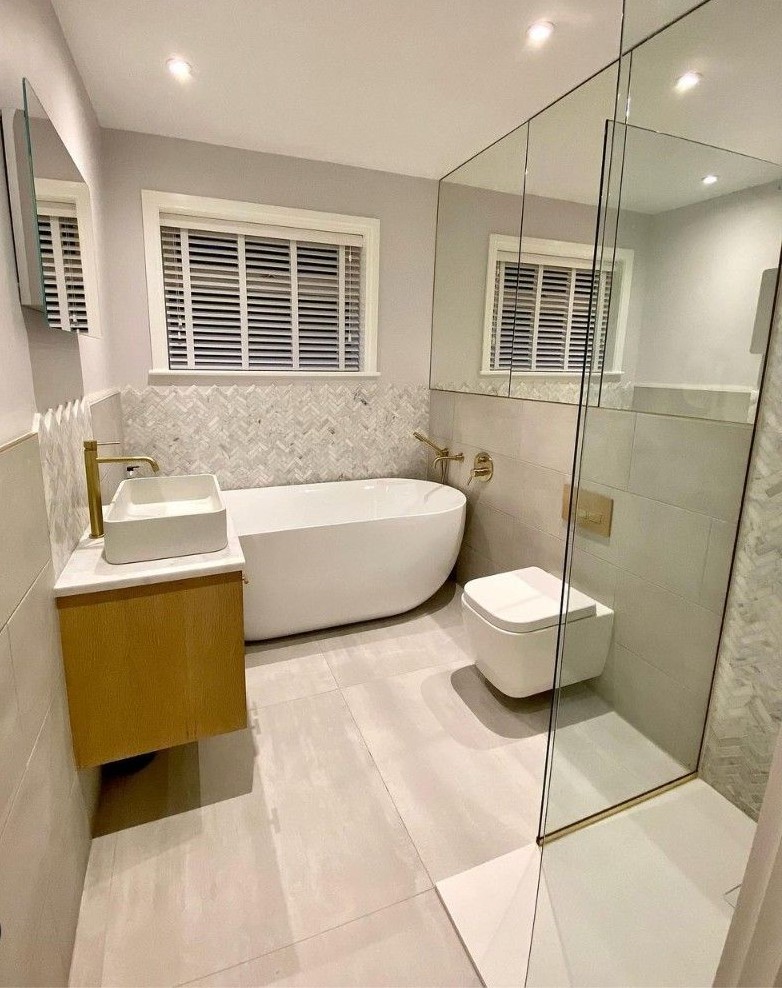
Illustrative keep versus move: a basin blocks the route
Imagine a deep basin unit opposite the shower entry. In the KEEP plan, a shallower unit at the existing position may restore the route with fewer service changes. In the MOVE plan, placing the basin on a clear adjacent wall may provide a better standing area—but only if the installer can confirm a suitable supply and waste route.
| Option | Layout benefit | Intervention to assess |
|---|---|---|
| KEEP: smaller basin unit at current position | May clear the shower entry without changing the room arrangement | Compatibility with existing connections, usable storage and new making-good work still need checking. |
| MOVE: basin on the adjacent clear wall | May separate basin use from shower entry and create usable storage space | New waste and supply routes, wall support, access, floor/wall repairs and any electrical changes. |
| Decision | Choose the move only if its extra benefit matters to the household | Compare complete scope and uncertainty, not just the fixture or plumbing line item. |
This is a conceptual layout comparison, not a promise that keeping connections will always be simple or that the move is feasible.
1. Plumbing changes are worth it when they solve a real layout problem
The strongest reason to move plumbing is simple: the current layout does not work well enough. If the room feels cramped, if the bath dominates the space unnecessarily, if the vanity position weakens circulation or if the shower would work much better elsewhere, then a plumbing change may unlock a noticeably stronger bathroom.
This is especially true when the new arrangement improves multiple things at once, such as openness, ease of movement, storage potential and overall visual balance.
2. The bigger the gain in usability, the easier the decision becomes
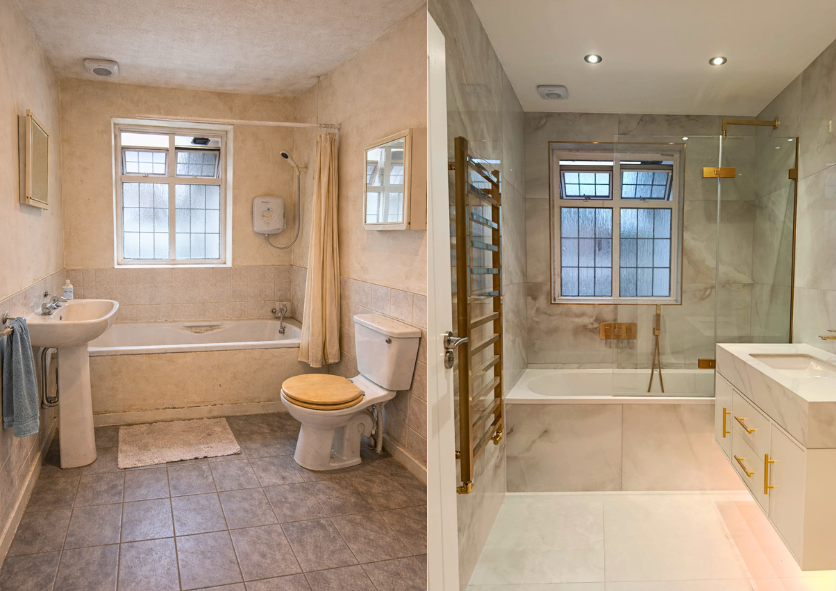
Plumbing changes make the most sense when the improvement is felt every day. A better shower position, a vanity that no longer blocks the room, or a layout that makes the bathroom much easier to move through often justifies the additional work much more clearly than a minor shift that changes very little in practice.
This is why the decision should be measured in room performance, not only in visual preference. The more the bathroom benefits in real use, the stronger the case for making the change.
3. In small bathrooms, the right plumbing move can make a big difference
Compact bathrooms often have very little tolerance for awkward positioning. A toilet, basin or shower set only slightly better can sometimes make the room feel dramatically easier to use. In those cases, moving the plumbing may be one of the most important parts of getting the layout right.
That does not mean every compact bathroom needs major reworking. But in smaller rooms, the benefits of a smarter arrangement can be much more noticeable than in a larger bathroom with more natural flexibility.
For compact-room planning overall, continue with Small Bathroom Layout Mistakes to Avoid Before Renovation Starts and Small Bathroom Design Ideas.
4. Replacing a bath with a shower is one of the clearest cases where plumbing changes may be worth it
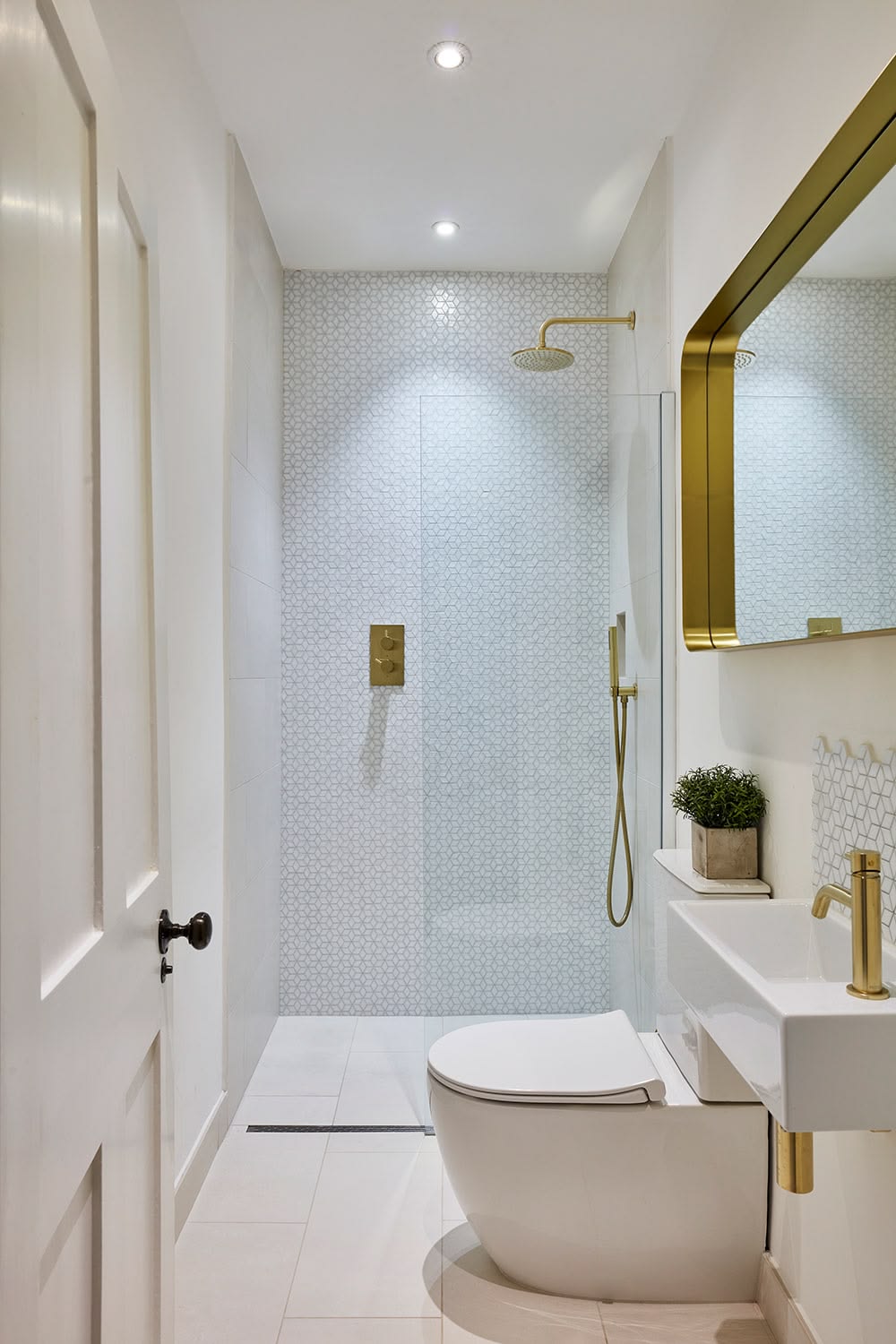
Replacing a bath with a shower does not necessarily require moving the shower zone across the room. Keeping broadly within the existing bath footprint may reduce relocation work, though the waste connection, drain position, waterproofing, screen and water supply still need assessment.
Moving the shower elsewhere may be justified if it creates a genuinely usable route or resolves access needs. Compare that benefit with the new drainage and floor construction requirements rather than assuming every bath-to-shower conversion needs major relocation.
For that specific decision path, read Should You Replace a Bath With a Shower? and Bath vs Shower.
5. Plumbing changes are less worth it when the new layout only looks different, not better
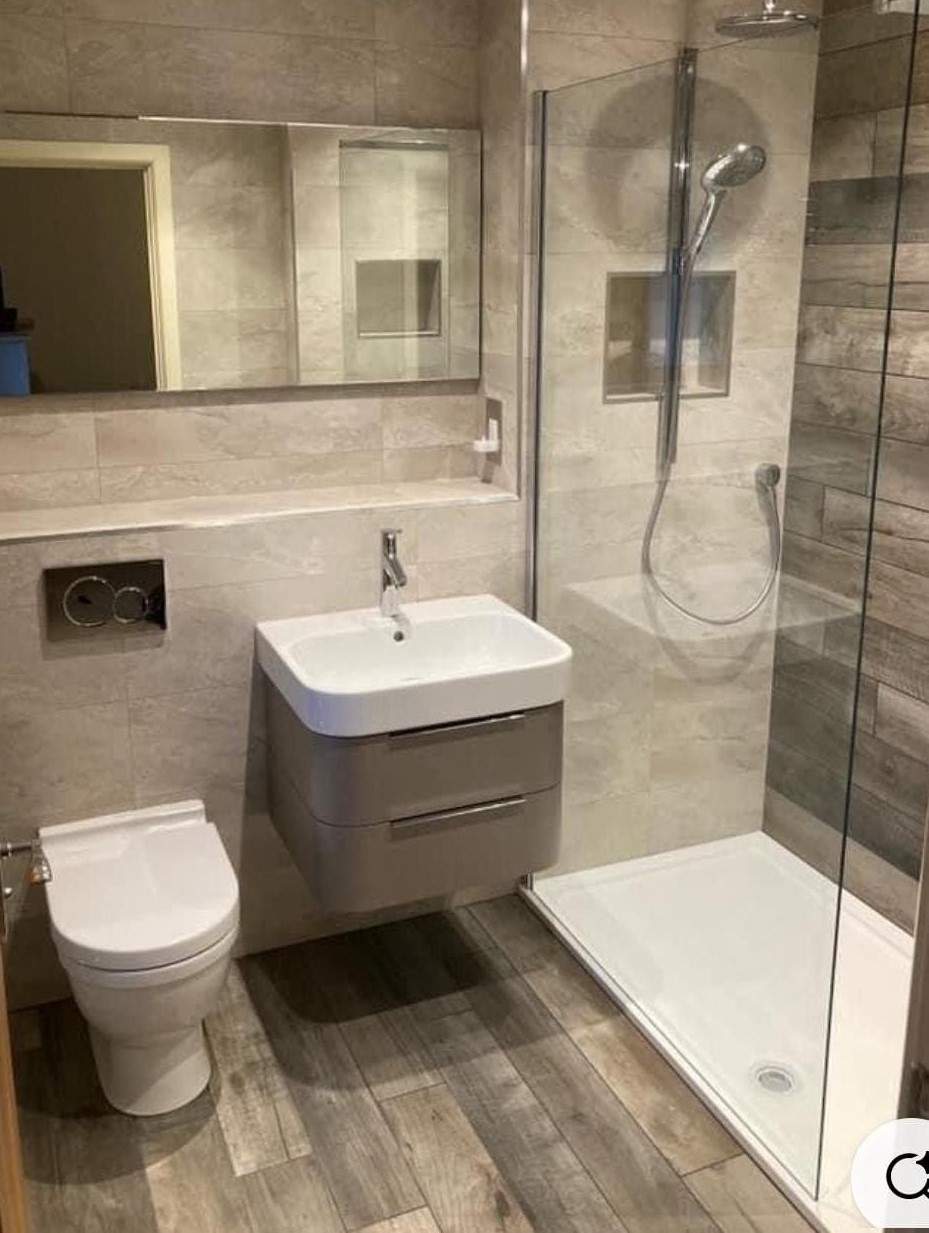
Not every new layout is a better layout. Sometimes people are tempted to move fixtures because change feels appealing during a renovation, but once the idea is tested properly, the room gains very little in return. If the new position does not improve circulation, function, comfort or visual calm in a meaningful way, the plumbing work may not be justified.
In these situations, keeping the existing general layout and improving the room through finishes, lighting, storage and better detailing can often be the smarter move.
6. Plumbing decisions need to stay connected to the technical plan
Ask the installer to identify the actual waste route and soil-stack connection, how the route can pass through the floor or wall build-up, and what access is available. Drainage fall, structural restrictions and maintenance access are feasibility checks—not details to leave until the room is stripped.
The scope also includes opening and closing surfaces, waterproofing disturbed areas, compatible finishes and any required electrical coordination. Confirm these alongside the layout; this is planning guidance, not instructions for rerouting pipes.
For the broader order of decisions, continue with What to Plan Before a Bathroom Renovation Starts .
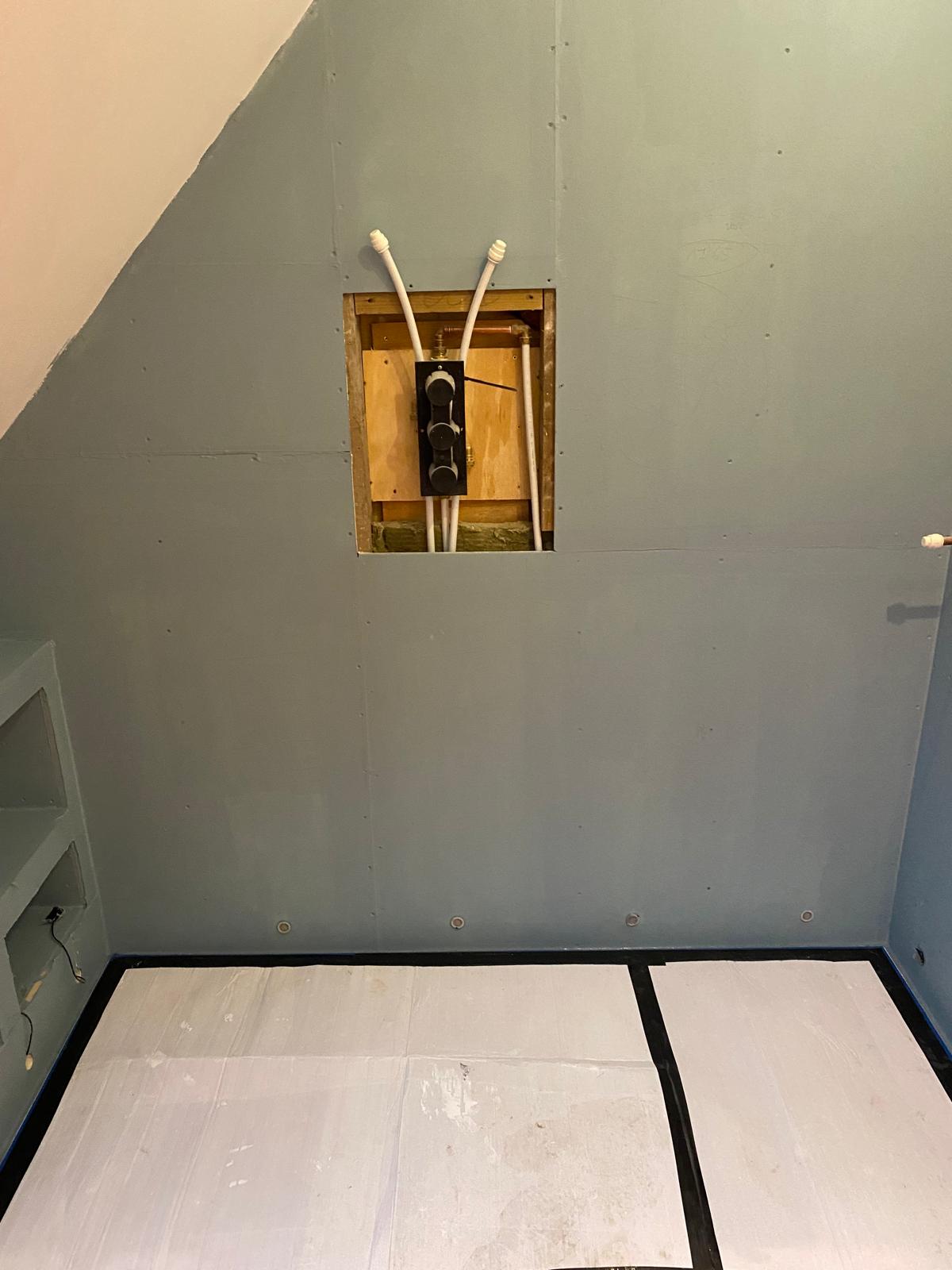
7. Sometimes the best move is to keep most plumbing where it is and improve the room around it
A bathroom can still improve dramatically without major plumbing relocation if the existing general arrangement is already workable. In those cases, a better shower type, smarter storage, cleaner tile strategy, stronger lighting and better-proportioned fixtures may create all the improvement the room needs.
This is often where the decision becomes clearer. If the room is fundamentally sound, the smartest approach may be to refine it rather than re-engineer it.
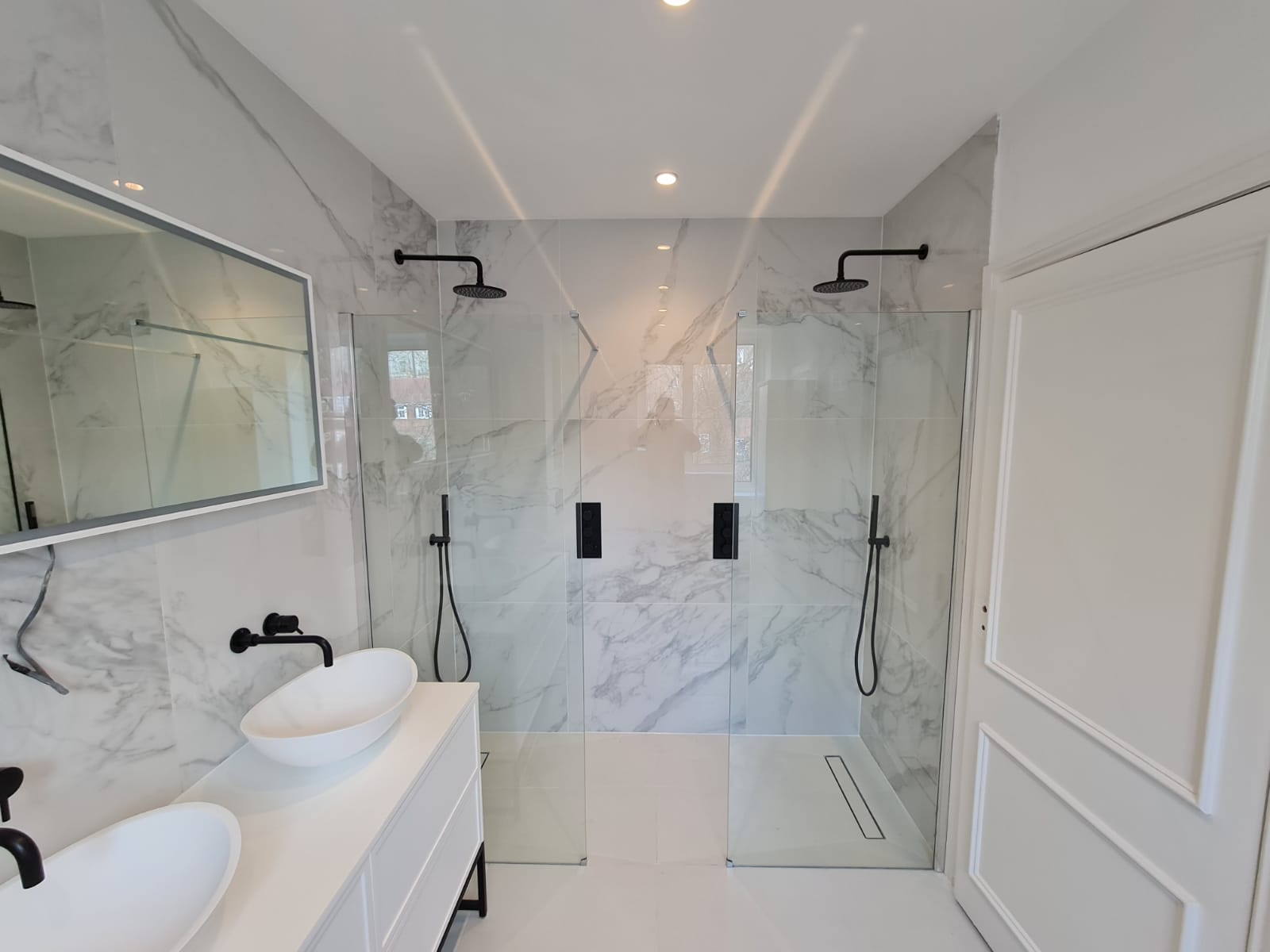
8. The right decision usually comes from comparing cost against room improvement
A like-for-like fixture change using service positions that remain suitable may be a lower-intervention option. Relocation across the room may involve a much larger scope, even if the fixture itself costs the same. Neither category determines the price without a site assessment.
Compare quotes that include access, pipework, drainage, floor or wall alterations, waterproofing and making good. If the move needs a raised floor or new boxing, put that consequence back onto the layout drawing; it may remove some of the space benefit you expected.
9. Plumbing changes are worth it when they support the full room, not just one fixture
The best bathroom decisions usually improve more than one thing at once. A plumbing move that helps the shower, the basin, the storage and the circulation all at the same time is much easier to justify than a move that benefits only one part of the room while leaving the rest unchanged.
This is usually the final test. If moving the plumbing helps the whole bathroom become more successful, it is often worth serious consideration. If it only changes one element without strengthening the room overall, it may not be the best use of effort.
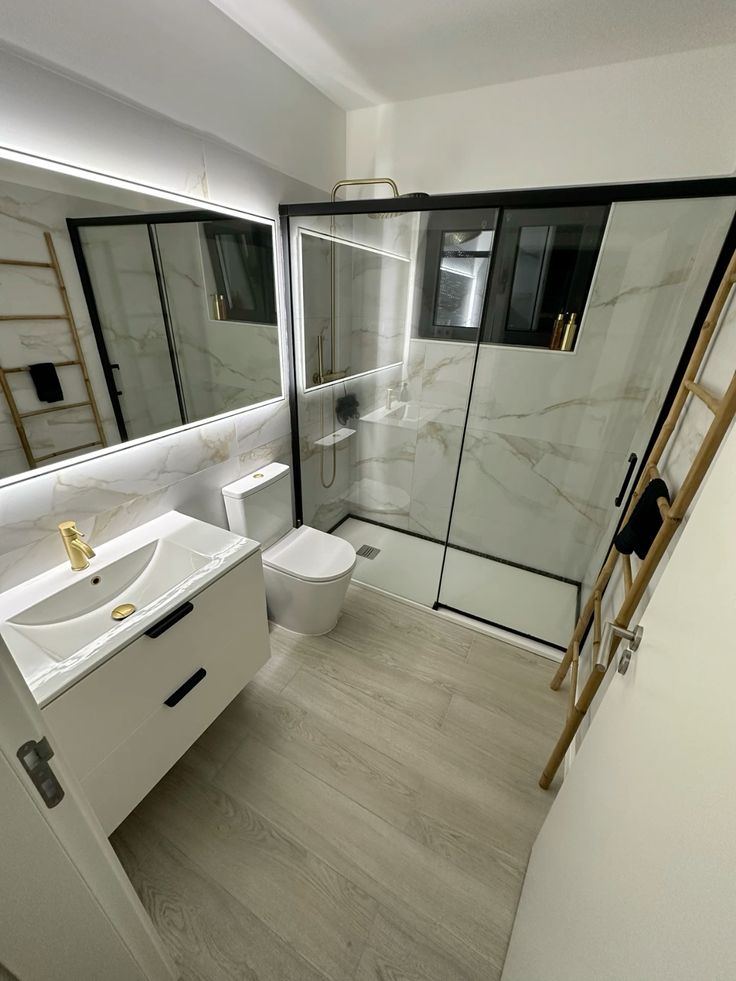
Fixture-by-fixture: what does the move give back?
| Fixture | A move may be worthwhile when… | What must be assessed |
|---|---|---|
| WC | It resolves a real door or use-space conflict that other changes cannot address | Soil-stack/waste route, floor construction, connection feasibility and future service access. |
| Basin | It separates grooming from the route to the shower or enables useful storage | Waste and supplies, wall support, unit size and any mirror/lighting coordination. |
| Shower | The current position prevents comfortable entry or workable screening | Drainage, floor build-up, waterproofing, supply requirements and splash boundaries. |
| Bath | A different position gives a genuinely better route while keeping the household’s bath use | Filled load/support where relevant, drain/access arrangements, supplies and surrounding finishes. |
Common mistakes when deciding on plumbing changes
- Moving plumbing without checking whether the room truly becomes better.
- Changing the layout because it feels more exciting, not because it performs better.
- Making plumbing decisions too late after other technical choices are already fixed.
- Assuming any plumbing relocation is automatically too expensive to consider.
- Forgetting that sometimes refinement around the existing layout is the smarter move.
Need help deciding which bathroom changes are actually worth making?
Compare the keep and move layouts before committing to fixture positions or demolition. Answer a few questions to get a free Bathroom Converter planning report, then have your installer confirm feasibility and the complete work scope.
Get Your Free Bathroom Planning ReportRelated planning guides

Online bathroom planning for UK homeowners.
Planning guidance only. Specialist confirmation required before design, quoting or installation.
© Copyright 2026 Bathroom Converter. All rights reserved