2 March slots left • April diary now open
Small Bathroom Design Ideas That Actually Make the Space Feel Bigger
A small bathroom does not need more visual noise. It usually needs better planning, fewer competing decisions and a clearer sense of what the room is meant to do. The right layout, colour direction, storage choices and lighting can make a compact bathroom feel calmer, more open and much easier to use every day.
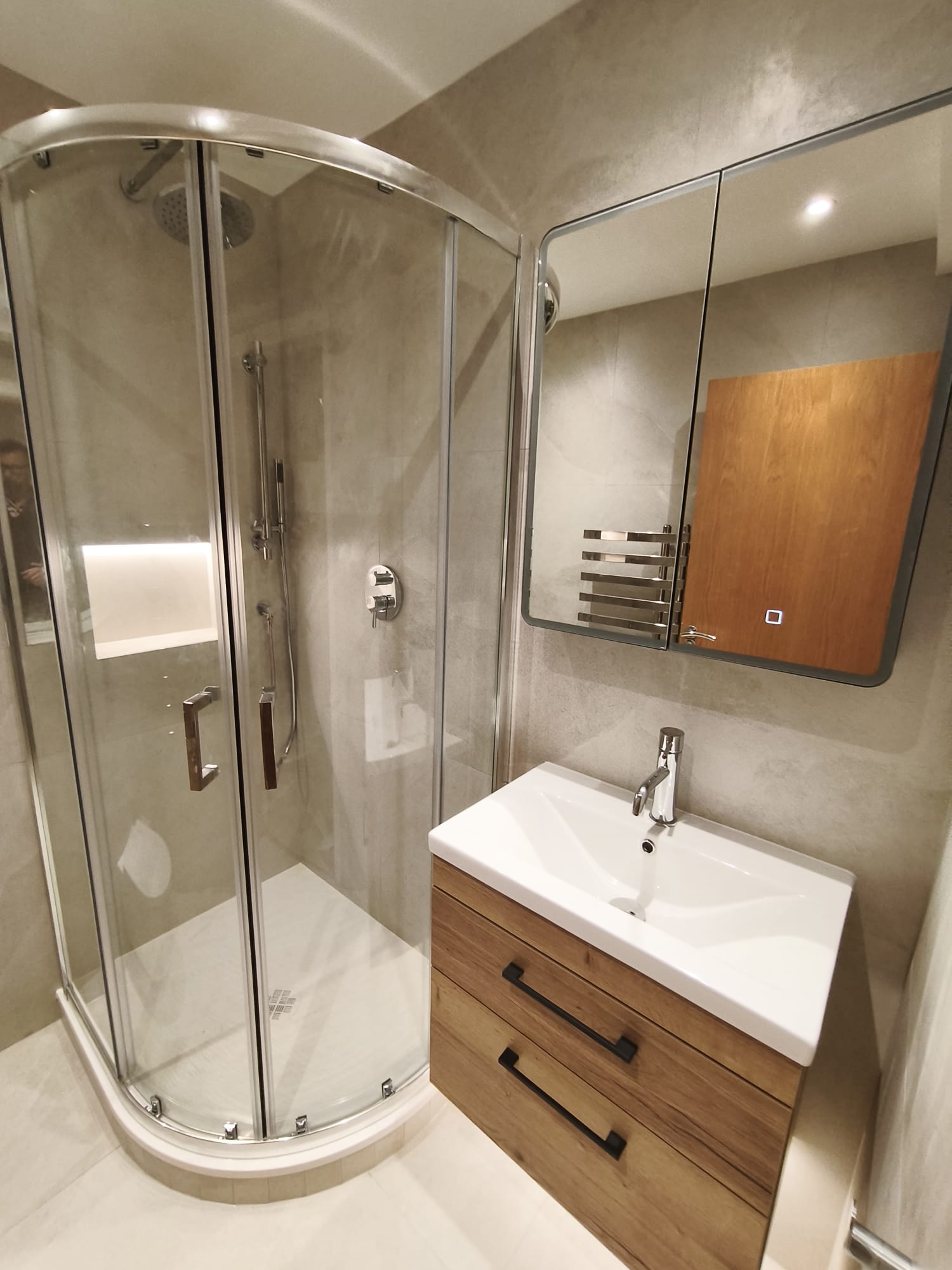
Many small bathrooms feel more cramped than they need to because too many decisions are made in isolation. Someone chooses a bath without checking circulation space. Someone picks dark tiles without thinking about light levels. Storage gets added late, mirrors are too small, and the room ends up feeling tighter than it should.
The better approach is to think about the bathroom as one complete system. The layout, the fixture sizes, the tile choices, the storage and the lighting all work together. When those choices support each other, even a compact bathroom can feel smarter, lighter and far more resolved.
Key takeaways before you start
- Small bathrooms usually improve more through layout clarity than through extra decoration.
- Keeping the fixture selection proportionate to the room often matters more than adding premium finishes.
- Using fewer materials and calmer colour transitions usually makes a compact space feel more open.
- Storage and lighting should be planned early, not treated as last-minute add-ons.
- If you are unsure whether the room should prioritise a bath or a shower, compare the options properly before committing.
1. Start with the layout before anything else
The most effective small bathroom design ideas usually begin with layout, not styling. Before choosing colours or tiles, work out how the room flows. Ask yourself whether the current arrangement actually makes sense, or whether the space is being wasted by oversized fixtures, awkward door swings or poor circulation.
In many compact bathrooms, the biggest improvements come from simplifying the plan. That might mean replacing a bath with a shower, switching to a wall-hung vanity, or repositioning a WC so the room feels less blocked when you enter.
If your bathroom needs to accommodate a shower, this is the point where it helps to read How to Design a Small Bathroom With a Shower. If the bigger decision is whether the room should keep a bath at all, it is worth comparing the options in Bath or Shower in a Small Bathroom?.
2. Use proportionate fixtures instead of forcing full-size ones
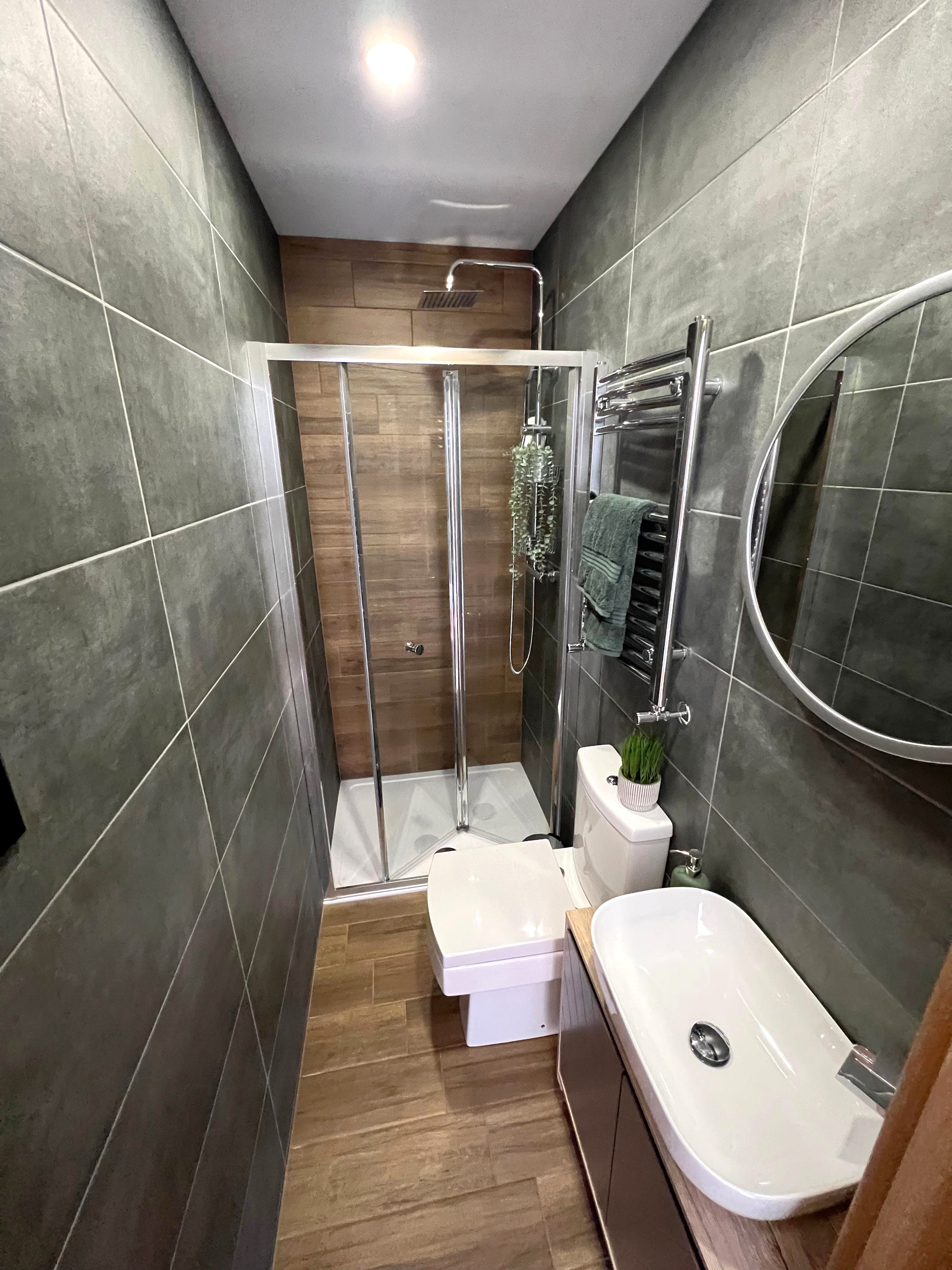
A common mistake in small bathrooms is trying to squeeze in fixtures designed for larger rooms. A vanity that is too deep, a toilet projection that takes up too much space, or a bath that dominates the room can all make a small bathroom feel awkward immediately.
The aim is not to make everything tiny. The aim is to choose fixtures that feel right for the room. In practical terms, that often means slimmer-profile vanity units, wall-hung elements where appropriate, neater shower screens and simpler forms that do not interrupt the room visually.
If you want to explore one of the biggest fixture decisions in more detail, the next best read is Bath vs Shower.
3. Make the room feel calmer with fewer finish changes
One of the fastest ways to make a small bathroom feel smaller is to break it up too much. Too many tile formats, too many feature areas, too many colours and too many visual changes can create a busy room with no sense of rest.
Small bathroom design tends to work best when there is a clear finish direction. That does not mean the room has to be plain. It means the materials should support each other rather than compete. A restrained palette, a cleaner tile strategy and better editing usually create a more premium result than trying to do too much.
Two particularly useful next reads here are Best Tile Colours for a Small Bathroom and Large Tiles vs Small Tiles.
4. Use colour to support openness, not just style
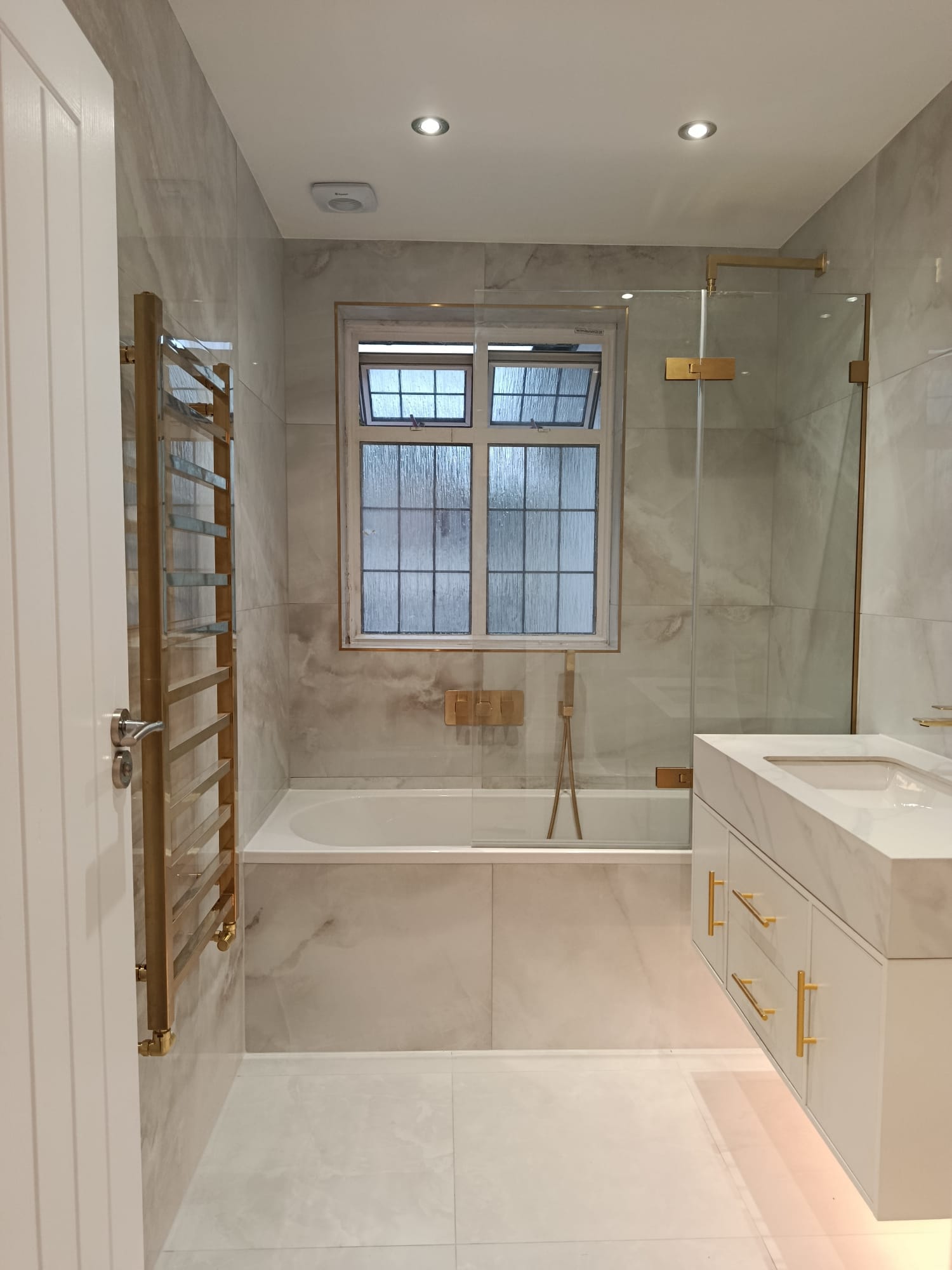
Colour choices in a small bathroom should do more than follow a trend. They should support the mood of the space and help the room feel visually easier to read. In many smaller bathrooms, lighter and softer finish directions help the room feel more open. Warm neutrals often create a more comfortable result than stark, clinical whites, while darker contrasts need to be used carefully if the room already feels tight.
The right palette depends on the room size, light levels and overall style direction. Some bathrooms suit a layered warm scheme beautifully. Others benefit from a simpler mineral or stone-inspired palette. The key is that the colours should work together quietly rather than competing for attention.
For a more detailed breakdown, go to Best Tile Colours for a Small Bathroom and Tiles & Finishes.
5. Treat storage as part of the design, not an afterthought
Small bathrooms usually fall apart visually when there is nowhere sensible to put everyday items. Even a well-finished bathroom can feel cluttered if products pile up around the basin, the shower and the edges of the bath.
Good storage is rarely about adding more units everywhere. It is about choosing the right type of storage in the right place. Integrated vanity storage, recessed shelving, mirror cabinets and well-positioned shower storage can all help the room feel more organised without looking heavier.
If storage is likely to be one of your biggest pain points, continue with Small Bathroom Storage Ideas and Bathroom Storage Ideas That Improve Everyday Use.
6. Plan the lighting early if you want the room to feel better
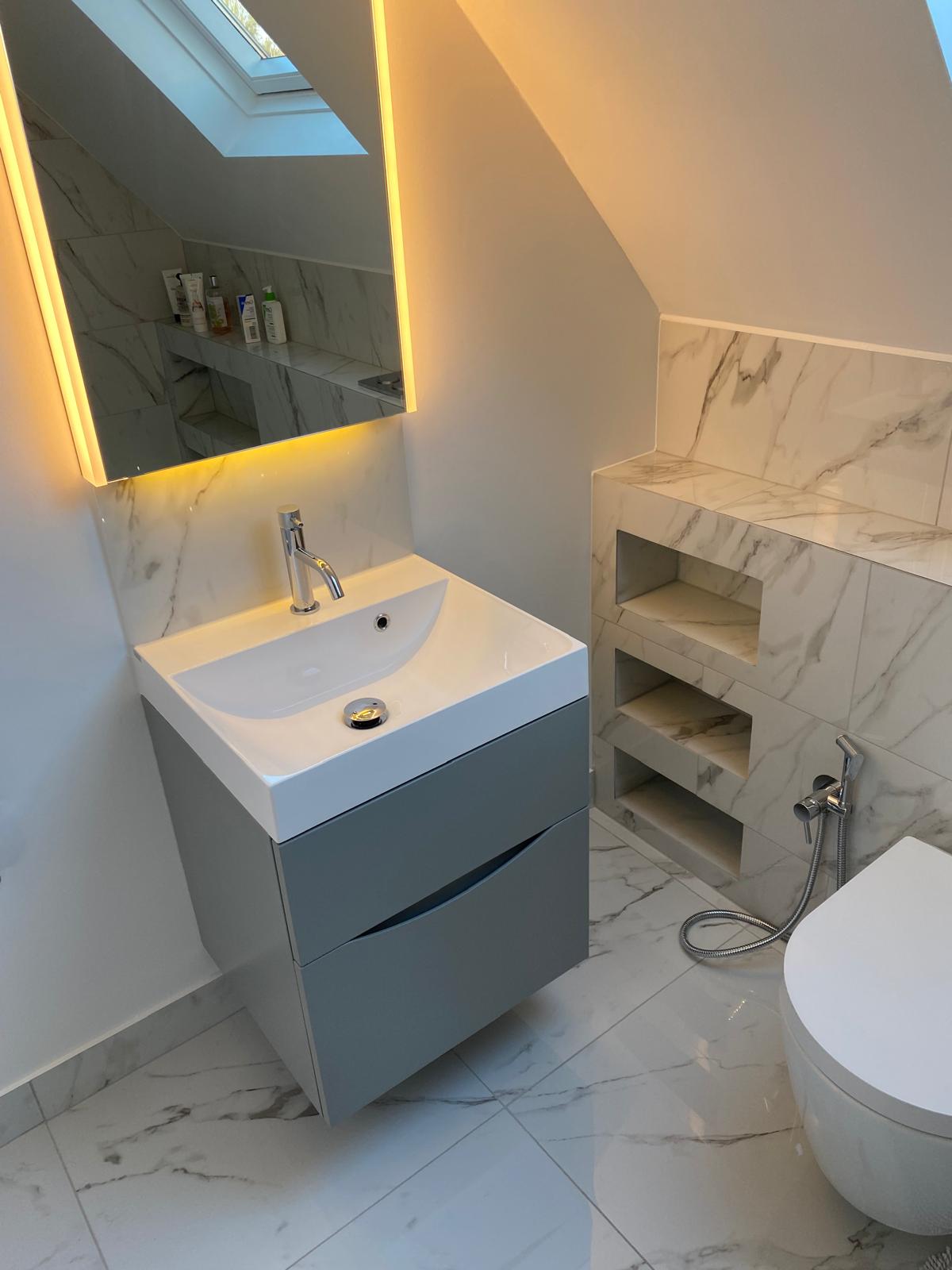
Lighting is one of the most underestimated parts of small bathroom design. A compact bathroom can be technically finished well and still feel underwhelming if the light is flat, badly positioned or too harsh.
Good small bathroom lighting is rarely about one bright ceiling fitting. It is about using layers properly. Mirror lighting, task lighting and softer ambient support can all help the room feel brighter and more balanced without feeling clinical.
If you are still early in the planning stage, read Bathroom Lighting Ideas. If first-fix decisions are already relevant, go to Bathroom Lighting Positions.
7. Keep mirrors and glass working for the room
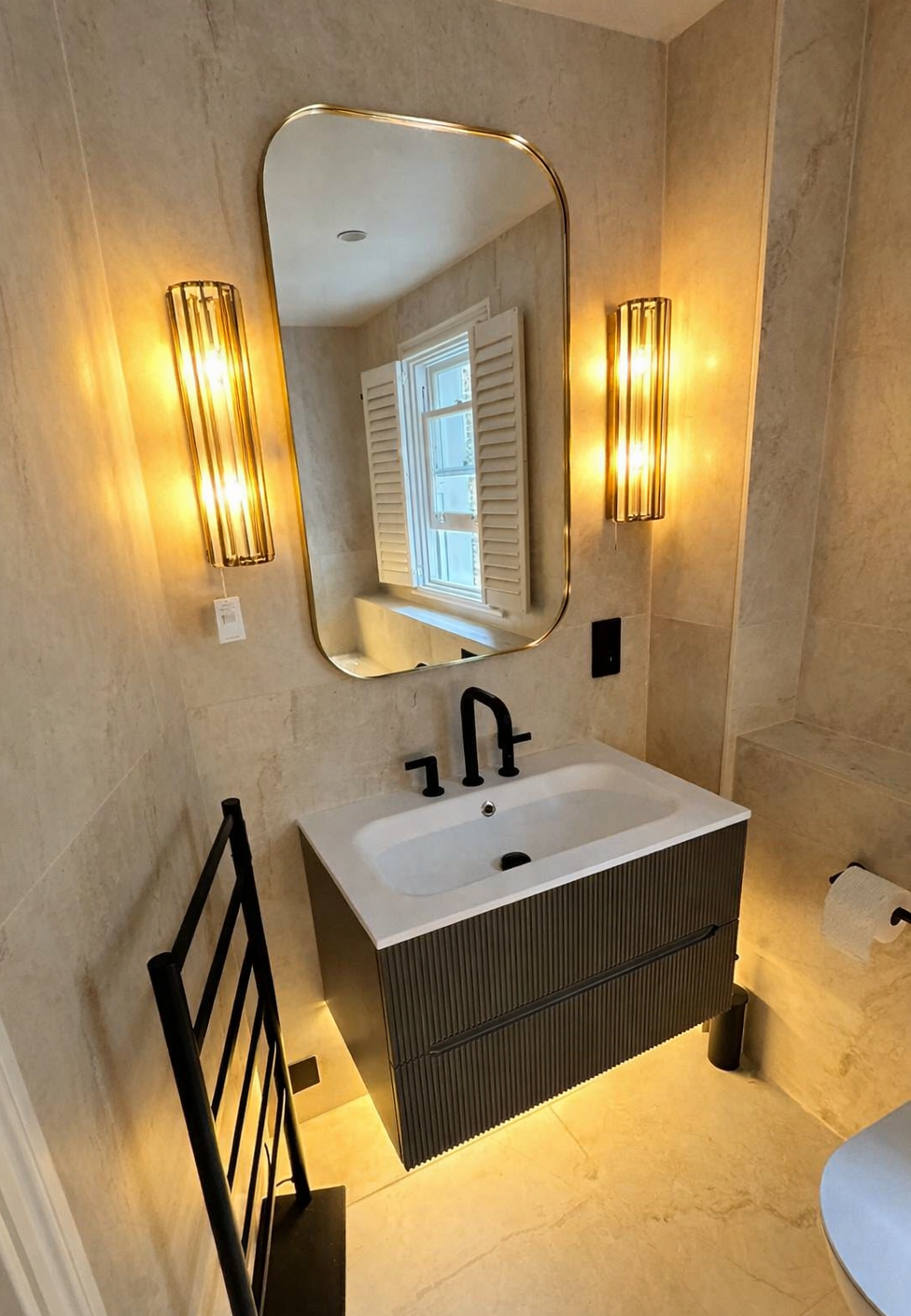
In a small bathroom, mirror and glass choices have more visual influence than people often expect. A well-sized mirror can expand how the room feels. A cleaner glass shower screen can help the eye travel further. A bulky framed mirror or heavy visual interruptions can do the opposite.
This is not about creating illusions for the sake of it. It is about reducing unnecessary breaks, allowing more reflected light and making the room feel easier to read at a glance.
8. Decide what matters most before you compromise badly
Many poor small bathroom outcomes come from trying to force every possible feature into one limited room. The better question is not “how do I fit everything in?” but “what does this room most need to do well?”
For some people, that means keeping a bath is worth the compromise. For others, a spacious shower and better storage matter far more. For some, the room should prioritise visual calm and easier use. For others, a more luxurious finish is the priority. Once you know what matters most, the design decisions become much clearer.
Common mistakes that make a small bathroom feel tighter
- Using oversized fixtures that reduce comfortable movement space.
- Adding too many materials, colours or tile formats in one room.
- Leaving storage until the end, then trying to bolt it on afterwards.
- Relying on one basic ceiling light instead of layered lighting.
- Keeping a bath by default without checking whether it still makes sense.
- Choosing statement features that interrupt the room more than they improve it.
Want clearer next steps for your own bathroom?
Answer a few quick questions about your space, style and priorities to get a free bathroom planning report with more tailored guidance.
Get Your Free Bathroom Planning ReportRelated planning guides
Smarter bathroom planning, design inspiration and fitting guidance for London homeowners.
© Copyright 2026 Bathroom Converter. All rights reserved