2 March slots left • April diary now open
How to Design a Small Bathroom With a Shower
A small bathroom with a shower can feel more open, more practical and easier to use every day — but only when the layout is planned properly. The best results usually come from choosing the right shower format, keeping the room visually calm and making sure every decision supports circulation, storage and comfort.
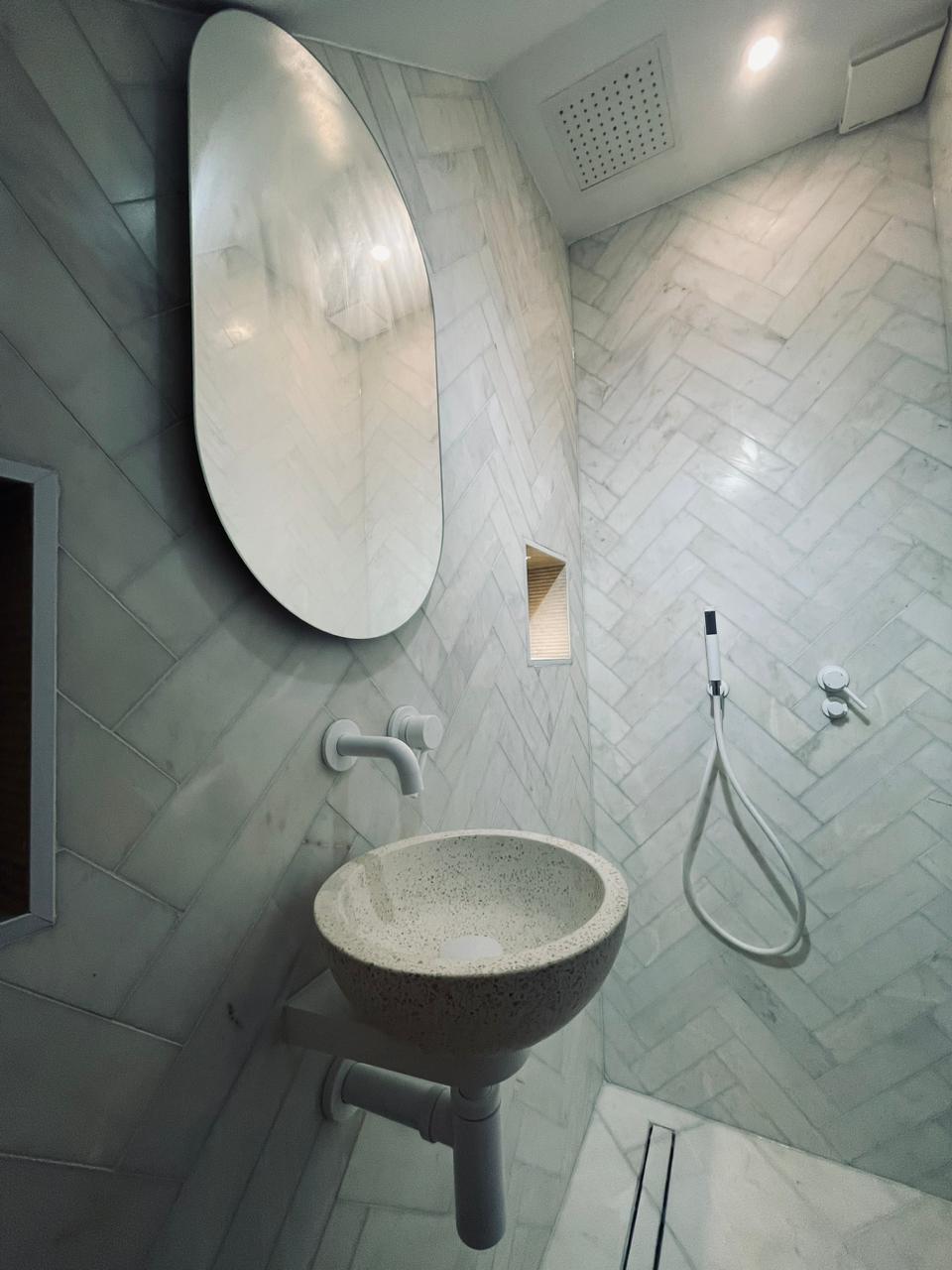
Many homeowners assume that replacing a bath with a shower automatically solves a small bathroom. Sometimes it does, but not always. A shower can absolutely improve a compact space, yet the room still needs to be planned as one complete system. The shower type, glass arrangement, tile direction, storage and lighting all affect whether the room feels better or still slightly compromised.
The goal is not simply to fit a shower in. The goal is to create a bathroom that feels easier to move around, calmer to look at and more useful in everyday life. When that is done well, a small bathroom with a shower often feels significantly better than a small bathroom trying to do too much at once.
Key takeaways before you start
- A shower can make a small bathroom feel more open, but only if the layout improves with it.
- Walk-in and enclosed shower options create very different visual and practical results.
- Glass, tile scale and colour all influence how spacious the room feels.
- Storage and lighting matter just as much as the shower itself.
- If you are unsure whether removing the bath is the right move, compare the decision properly before committing.
1. Decide whether a shower genuinely suits the room better
A shower often works brilliantly in a smaller bathroom because it can free up floor space, simplify the plan and make movement easier. That said, it should still be a deliberate decision, not just a default one. Some homes still benefit from keeping a bath, especially where family use matters or where the room does not actually gain much from the change.
In many compact bathrooms, though, a shower creates the clearest improvement. It can open up the room visually, reduce the sense of bulk and make the daily routine feel faster and easier. The important thing is to check whether the layout will actually improve once the bath is gone.
If you are still weighing up the bigger decision, compare Bath vs Shower and Should You Replace a Bath With a Shower? before locking anything in.
2. Choose the right shower type for the space
Not every shower works equally well in a small bathroom. The best option depends on the room shape, the door position, the available wall lengths and how open you want the bathroom to feel.
A clean walk-in shower can make a compact room feel more spacious because it reduces visual interruption. A more enclosed shower can sometimes be the better option where splash control, room shape or daily practicality matter more. Corner shower formats can work in the right room, but they need to be chosen carefully so they do not make the bathroom feel dated or awkward.
If you want to compare this in more detail, the next reads are Walk-In vs Enclosed Shower and Walk-In Shower Ideas.
3. Let the shower improve circulation space
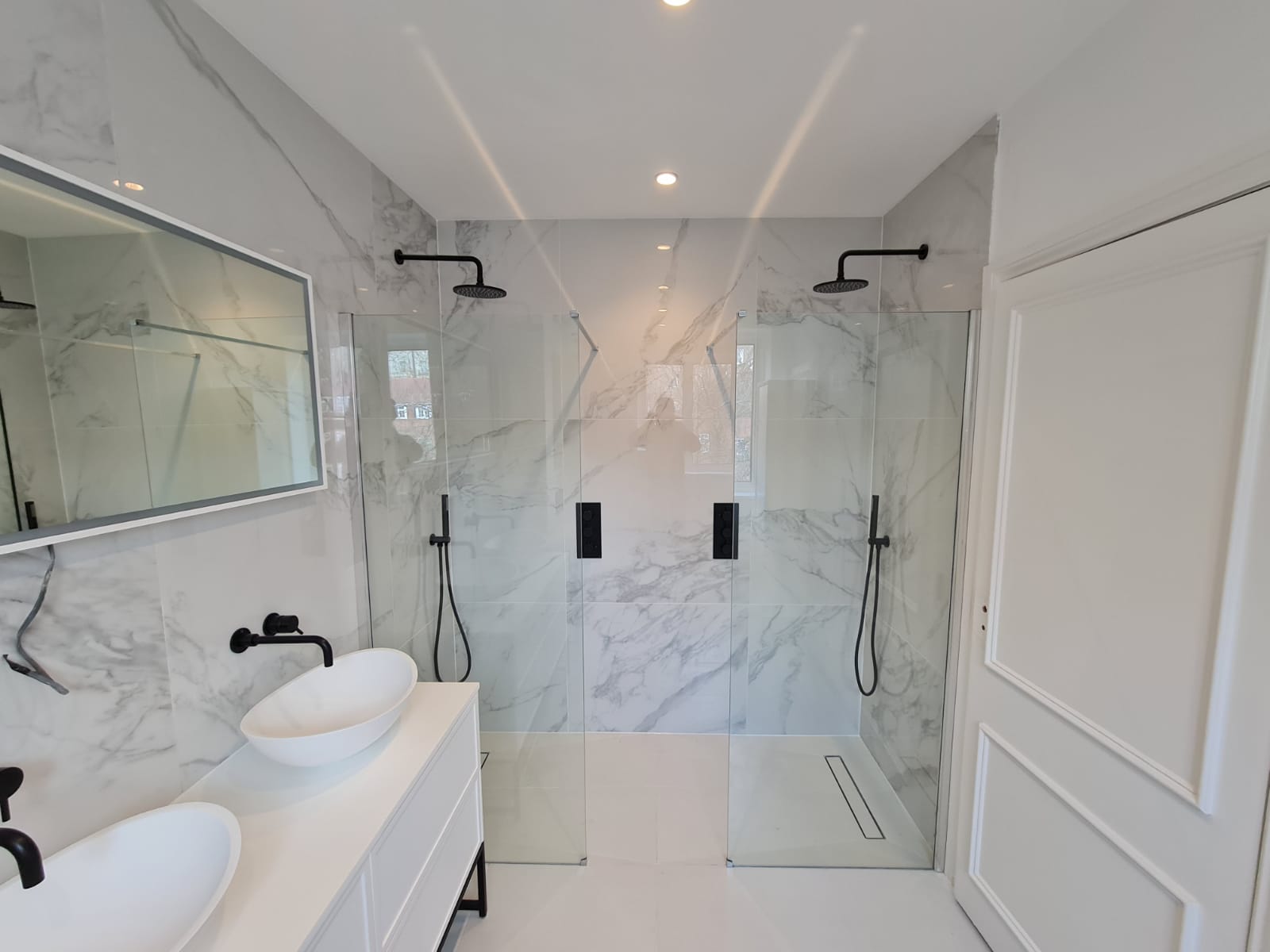
One of the best reasons to choose a shower in a small bathroom is that it can improve how the room flows. The area in front of the basin, WC and shower entrance should feel usable rather than squeezed. If the shower still leaves the room awkward to move around, the design has not really solved the problem.
This is why layout matters so much. The shower position should support the room, not dominate it. Sometimes shifting the shower to the far end of the room creates a much cleaner read. Sometimes the right solution is a simpler linear layout that keeps everything easier to understand the moment you walk in.
For the broader layout picture, go back to Small Bathroom Design Ideas That Actually Make the Space Feel Bigger.
4. Use glass and lines carefully if you want the room to feel bigger
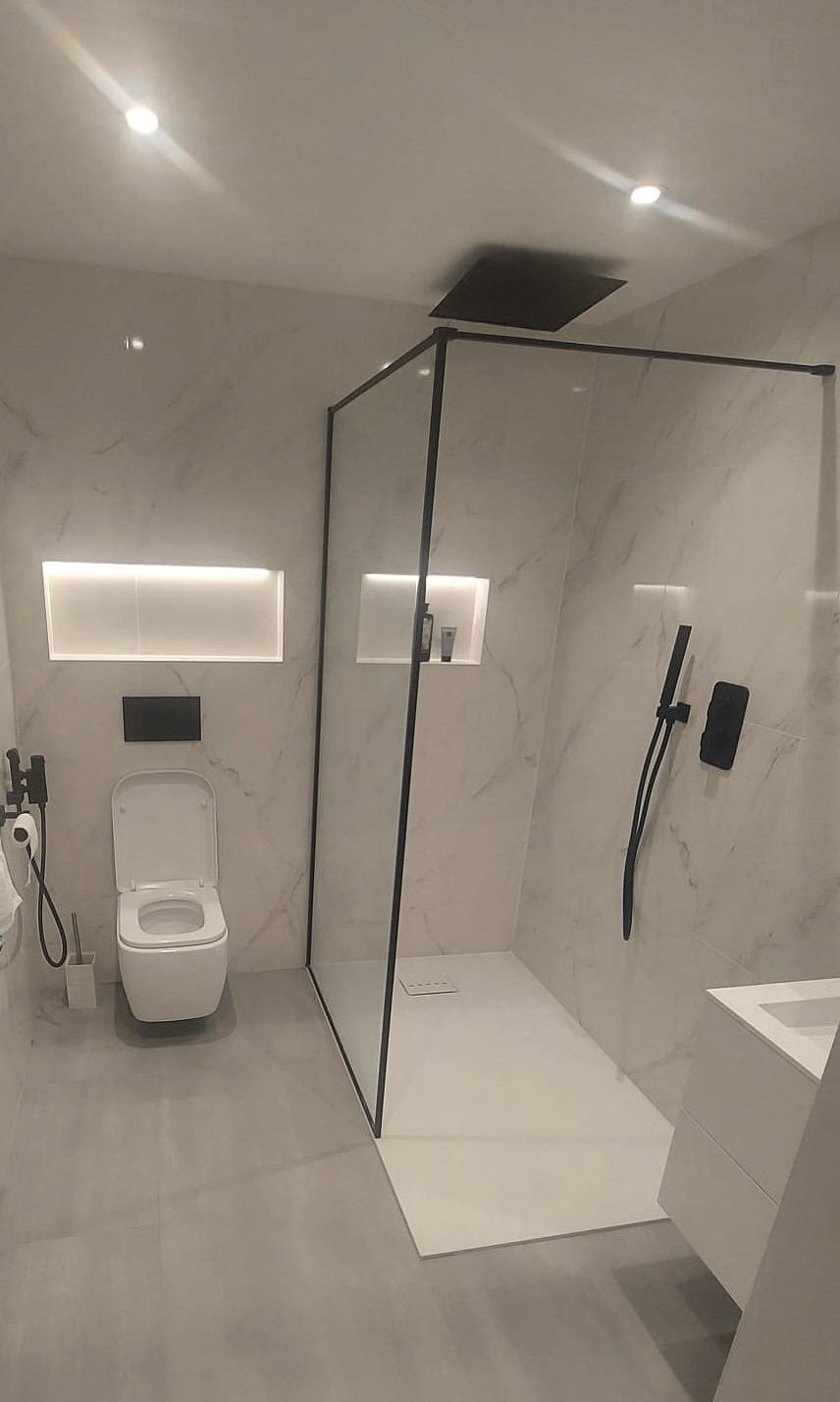
In a small bathroom, the shower screen has a bigger visual impact than people often expect. Cleaner glass, fewer heavy breaks and simpler framing usually help the eye move through the room more easily. That can make the bathroom feel calmer and more open, even when the actual footprint stays the same.
This does not mean the most minimal option is always the best. The screen still has to work practically and feel right for the room. But in general, lighter visual interruptions support a more spacious result.
5. Keep the finish strategy calm around the shower area
The shower zone is often where small bathrooms become too busy. Different feature tiles, contrasting floors, strong grout lines and several material changes can make the room feel broken up rather than refined.
A better approach is to keep the finish strategy cohesive. Let the shower feel like part of the room, not like a separate theme. That often means fewer tile changes, a calmer colour palette and a more consistent visual rhythm across walls and floors.
Two strong follow-up reads here are Bathroom Tile Ideas and Best Tile Colours for a Small Bathroom.
6. Plan shower storage early, not after tiling starts
A small bathroom with a shower quickly feels cluttered if everyday products have nowhere sensible to go. Bottles on the floor, overfilled corners and poor shelf placement can make the shower area look messy even if the rest of the bathroom is well designed.
The best time to think about shower storage is early. Recessed niches, built-in shelves and carefully positioned storage can all work well, but only if they are planned before waterproofing and tiling decisions are finalised.
The two best supporting reads here are Shower Niche vs Shelf and Built-In Shower Shelves.
7. Make the lighting work with the shower layout
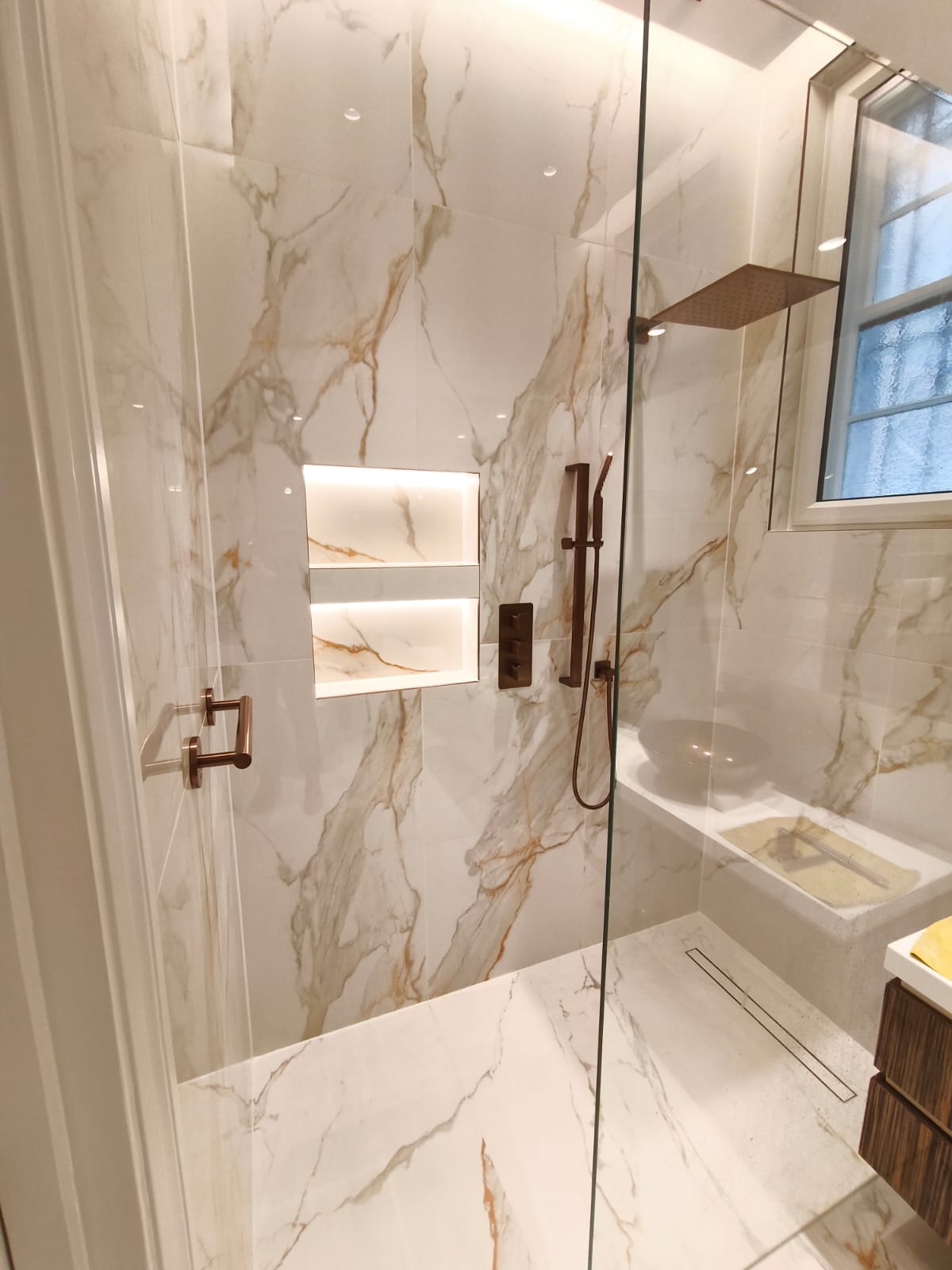
In a smaller bathroom, lighting affects whether the shower area feels clean and welcoming or dull and boxed in. A single ceiling light rarely does enough. Better mirror lighting, layered lighting and well-positioned task lighting can help the whole room feel more resolved.
This is especially important if the shower becomes the main visual focus of the room. The lighting should support that clean, open feeling rather than flatten it.
For that side of the planning, continue with Bathroom Lighting Ideas and Mirror Lighting Ideas.
8. Do not forget the technical implications of changing to a shower
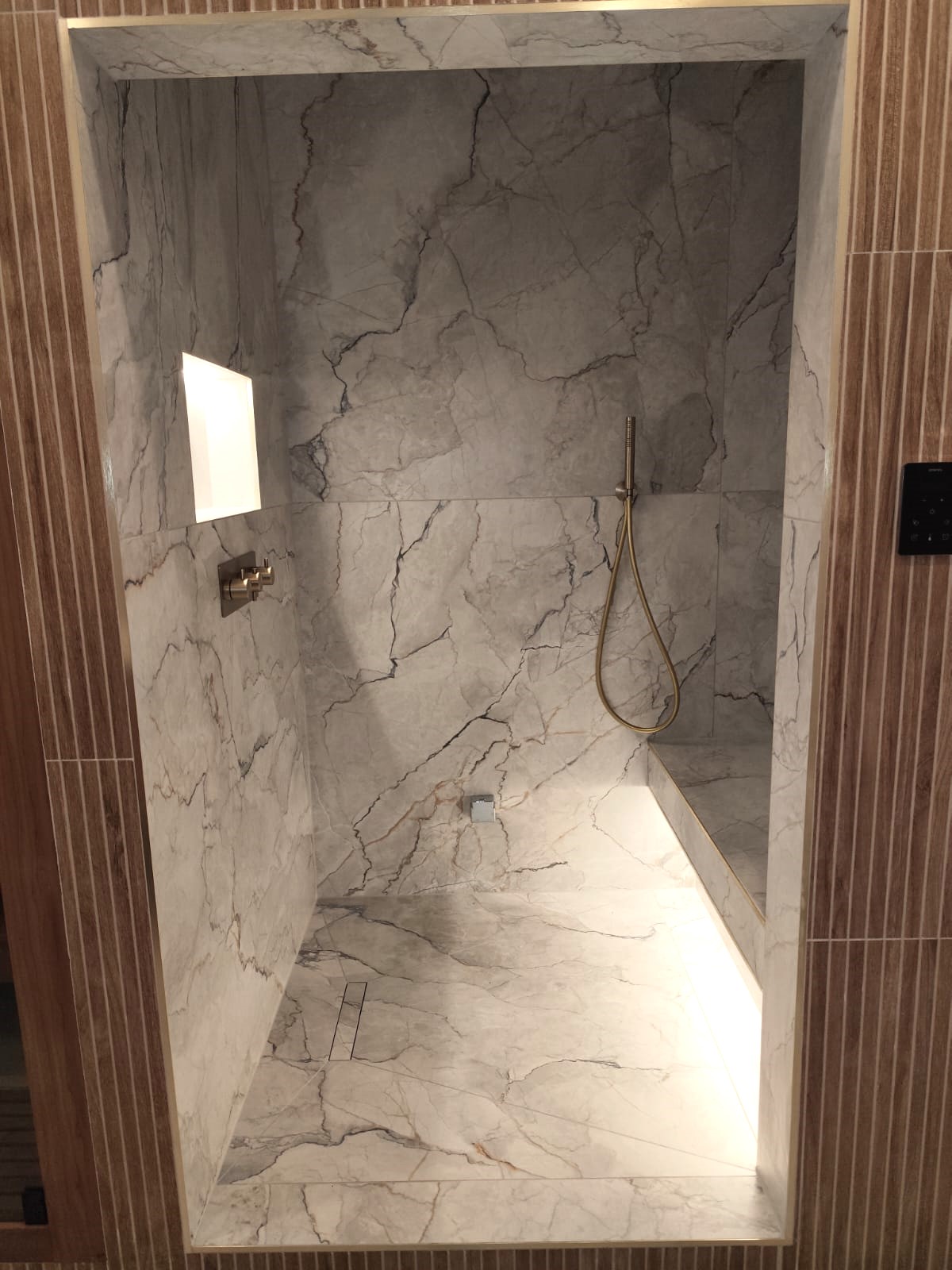
A shower-led small bathroom often looks simpler in the finished photos, but there can be important technical decisions underneath. Drainage, waterproofing, floor build-up, screen detailing and pipework all need thinking through properly if the final room is going to perform well.
This is especially relevant if you are considering a more open shower format or moving the plumbing to improve the layout. Those changes can be worth it, but they should be planned with the full room in mind.
For the technical side, read What to Plan Before a Bathroom Renovation Starts and Bathroom Waterproofing: What Needs Thinking About Early?.
Common mistakes in a small bathroom with a shower
- Choosing a shower format that does not actually improve the room layout.
- Using too many finish changes around the shower area.
- Adding storage too late and creating clutter around the tray or floor.
- Forgetting that glass and screen style affect how spacious the room feels.
- Ignoring waterproofing, drainage and technical detailing until too late.
- Removing a bath without checking whether the room truly benefits from the switch.
Want clearer next steps for your own small bathroom?
Answer a few quick questions about your space, layout and priorities to get a free bathroom planning report with more tailored guidance.
Get Your Free Bathroom Planning ReportRelated planning guides
Smarter bathroom planning, design inspiration and fitting guidance for London homeowners.
© Copyright 2026 Bathroom Converter. All rights reserved